Wednesday, August 02, 2006

Tourism / resorts

50. Alabama Gulf Coast. Thirty two miles of the whitest sand, turquoise water and outstanding accommodations. Free
51. American Cruise Lines. Scenic and culturally enriching cruises through the inland passages of the Eastern seaboard. Free
52. Arlington, Virginia. Enjoy monumental views of Washington, D.C. from Arlington, Virginia. Visit www.stayarlington.com for a free Visitors Guide or call 1-800-677-6267. Free
53. Asheville, NC. Colorful and creative. Inviting and inspirational. Earthy and elegant. Asheville. Any way you like it. ExploreAsheville.com, 877-836-9080. Free
54. The Beach Club offers shopping, great dining, and ultimate pampering for guests…all within walking distance of the beachfront residences. Free
55. Beech Mountain, NC. A friendly mountain resort community with spectacular outdoor adventure in a comfortable climate where temperatures rarely exceed 70 degrees. Free
56. Berea, Kentucky. Folk art and craft capital of Kentucky. 2 miles from I-75. Free
57. Biltmore Estate. Enjoy the long-lasting benefits of a Biltmore Estate getaway. Discover a destination featuring America's largest home, four-star inn, and winery. Free
58. Brett/Robinson. The Phoenix condo of Orange Beach. AL offers free night specials. Gulf views, pools and much more. Free
59. Bullitt County/Shepherdsville, KY. If you're looking to be with friends, come to Bullitt County and feel right at home. Free
60. Chattanooga, TN. Check out all the new things to see and do in Chattanooga. Go to www.chattanoogafun.com. Free
61. Chesapeake Bay Bridge Tunnel is a spectacular 17.6 mile drive for motorists, Free
62. Clarksville, Tennessee. A riverfront, historic downtown and pioneer settlement are yours to explore. 40 minutes NW of Nashville on 1-24. Free
63. Cleveland-Bradley County, TN. Near Chattanooga, find glorious mountain scenery, whitewater rafting, rich Cherokee heritage and a charming downtown. Free
64. Connecticut East. Mystic Seaport. Mystic Aquarium. Mystic Pizza. Not to mention casinos, museums, coastline, countryside, and the intimate landscapes of the quiet comer. Free
65. Crown Reef Resorts. Offering 514 oceanfront rooms and suites, 80 pools, 575 ft. lazy river, fitness center, giftshop and two restaurants. Free
66. East Tennessee & Smoky Mountains. Majestic Mountains, one of a kind attractions! For information, upcoming events, special promotions & to register for a free East Tennessee Vacation visit www.EastTnVacations.com. Free
67. Elizabethtown. KY. We inspired a movie, now let us inspire your next vacation! Historic sites, museums and scenic recreational sites. Free
68. Elvis Presley's Graceland. Visit Elvis Presley's home, Graceland. in Memphis. Stay at Elvis Presley's Heartbreak Hotel. Free
69. Go RVing. What will you discover when you Go RVing? Visit GoRVing.com or call 1-888-Go RVing for our complimentary new DVD or CD-ROM. Free
70. Grand Ole Opry. See the best in country music including today's new stars, superstars, and legends live on the world-famous stage of the Grand Ole Opry. Free
71. Great Smoky Mountains Railroad. See the Smokies by train as you travel through mountain tunnels, across deep gorges, and over mighty rivers with a variety of year round excursions. Depots in Dillsboro and Bryson City, NC. Free
72. Greensboro, NC. Discover relaxation & fun, visit historic sites, shop at Replacements, fantastic furniture finds, terrific theater. Free guides, discount coupons. Free
73. Gulf Shores Plantation. Directly on the Gulf. Condos & cottages, pools, tennis, golf next door. Gulf Shores' affordable resort. 1-888-249-3844. Free
74. Hilton Head Island-Bluffton, SC. Do you dream of lush paradise with pristine beaches, abundant diversions and indulgent accommodations? Find it all on Hilton Head Island. Free
75. Historic Richmond Region. Get a free hotel stay plus discounts at popular restaurants, shops and more in the Historic Richmond Region. Free
76. Jamestown Settlement & Yorktown Victory Center. Explore America's colonial beginnings through museum gallery exhibits and living history depicting 17th & 18th century Virginia. Free
77. Johnson City, TN. Not far from the AP Trail, you'll find a haven of bluegrass music, historical homesteads, good food and tali tales let loose regularly in Jonesborough, Free
78. Kaiser Realty, Inc. Exceptional Gulf front condominiums and beach homes. Condominium bonus night specials. Golf packages. Virtual tours. Special packages and online reservations. Free
79. Kentucky & Barkley Lakes. Free 2006 travel planner featuring lodging, attractions, dining, arts, entertainment, shopping, boating, fishing, hunting and events in Western Kentucky's Lakes & Rivers Region. Free
80. Kentucky's Bluegrass, Blues & Barbecue Region. Treat your family and friends to a fantastic getaway — where music legends began! www.bbbregion.org. 1-800-225-TRIP, Ext. GR8. Free
81. Kentucky's Bluegrass Region. Soft rolling hills, white fences, horses, history, bourbon, arts and crafts- a never ending list of places to see and things to do. Free
82. Kentucky's Caves, Lakes & Corvettes. Adventurous Family Fun! Mammoth Cave National Park, National Corvette Museum, lakes, kangaroos, dinosaurs, Wild West Town, Shaker Museum, scenic drives and more! Free
83. Kentucky Dept. of Tourism. Kentucky has always been a great place to explore and it's never been easier 1-800-225-TRIP, www.KentuckyTourism.com. Free
84. Kentucky Highlands. Breathtaking scenery, mountains, parks, golf lakes, festivals, entertainment, museums, crafts and antiques. Outdoor wonderland! Free
85. Kingsport-Tennessee. Natural beauty, excellent outdoor recreation opportunities, down home Southern hospitality. Visit us for an unforgettable experience. Free
86. Kissimmee — St. Cloud, Florida. Exciting attractions, nature adventures, terrific values, and a variety of accommodations. Free
87. Knoxville, TN. Discover Knoxville's great shopping, 600+ restaurants, 21 museums, excellent zoo, wholesome family activities and nightlife. Free
88. Lexington. Kentucky. Discover the Horse Capital of the World-KY Horse Park. Horse farm tours, walking & driving tours. Free
89. Lexington Kentucky Historic Homes. Ask for your ticket to history and tour four historic homes for one low price. Free
90. Meyer Real Estate. Beach vacation giveaway! Register at www.MeyerRe.com. Vacation rentals and real estate sales. View our interactive planner and specials. Free
91. Missouri Tourism. Free Missouri Travel Kit! Escape to Missouri — Where the rivers run. Free
92. Nashville Music City. Expect the unexpected. Music, entertainment, weekend packages. Free
93. New Hampshire Lakes Region & White Mtns. Beautiful scenery, numerous family attractions, outdoor recreation, shopping, dining & a variety of lodging options. Free
94. North Carolina Tourism. Explore North Carolina. Historic villages. Lively cities. Challenging golf. Natural scenic beauty. Free
95. North Myrtle Beach Chamber of Commerce. Destination North Myrtle Beach. SC-Home of great resorts, entertainment, fine dining, fabulous shopping and championship golf. Free
96. Northern Kentucky River Region. Family fun, festivals, spectator sports, museums and lots of shopping. Free
97. Pigeon Forge. Tennessee. For information on attractions, theaters, outlet malls and Dollywood, call 1-800-933-9036 or visit www.mypigeonforge.com for a free travel planner. Free
98. Pocahontas County, WV. Experience Nature's Mountain Playground in Pocahontas County. WV Home of Snowshoe Mountain. Cass Scenic Railroad and the National Radio Astronomy Observatory. Free
99. ResortQuest-Destin, FL. Let ResortQuest Destin vacation specialists create the perfect beach vacation for you. Call today 1-866-451-1201 or visit www.ResortQuestNWFL.com. Free
100. Roanoke Valley, Virginia. Experience the charm of the Valley. Located off 1-81 and the Blue Ridge Parkway. Golf packages & African-American Heritage Trails. Free guides Free
101. Sandusky/Erie County. Get the Buckeye North visitors guide to the Sandusky. Cedar Point and Lake Erie Islands area, including discount coupons. Free
102. Savannah, Georgia. One of the South's most intriguing and mysterious cities. Savannah will captivate you with her natural beauty, eccentric charm and traditional Southern hospitality. Free
103. Sevierville, TN. The best shopping, golf, exciting new attractions and outdoor activities… Where Smoky Mountain fun begins. Free
104. Shaker Village of Pleasant Hill. Experience 19th century life. Tour, dine, shop and stay overnight at the largest Shaker community in the U.S. Free
105. Smith Mountain Lake, VA. 500 miles of shoreline surrounded by the Blue Ridge Mountains-golf, fish, boat, dine, shop, a year round destination. Free Guide. 1-800-676-8203 or www.visitsmithmountainlake.com. Free
106. Smoky Mountains- Townsend, TN. Visit Townsend. Tennessee and explore the peaceful side of the Smokies. Free
107. Southern Kentucky Vacations. A scenic wonderland filled with excitement and adventure. Come see us. You'll be glad you did! Free
108. Staunton. Virginia. Staunton's historic charm and warm hospitality will make your visit an unforgettable excursion into America's past. Free
109. Tennessee Department of Tourist Development. Tennessee, the stage is set for you! Call 1-800-GO2TENN or click tnvacation.com for your free Tennessee vacation guide. Free
110. Texas Tourism. For your free Texas Travel Guide with over 260 pages of helpful information call 1-800-8888-TEX. or visit www.TravelTex.com.
111. Virginia Tourism. 90 wineries. Beaches. Mountains. Music. Escape to the good life with Virginia. For a free Travel Guide, call 1-800-VISIT-VA or visit Virginia.org. Free
112. Wilmington, DE. Three Major Andrew Wyeth Exhibitions! March 29-July 16. Experience the countryside that inspires him! Wilmington, DE and the Brandywine Valley. 1-800-489-6664 or VisitWilmingtonDE.com. Free


Source: Country Living

Wednesday, July 12, 2006

Business Travel Tips For Bozos

Shoes off. Mouth shut. Bags checked. Hands to self. Compress gas pedal.FEW HELPFUL NOTES FOR SEVERAL OF YOU who stood or sat near me at various airports or on one of several planes in the last week or so (you know who you are):

1. Yes, you have to take your shoes off at the security checkpoint, and no, the TSA personnel really don’t care if they’ve NEVER set off a metal detector ANYWHERE. There’s a guy named Big Rocco in a dark room with a pair of latex gloves just praying that you’ll make a big deal out of your Italian loafers. Do yourself (and us) a favor and don’t.2. Thanks for inviting me to your meeting. I mean, I assume I was invited to your meeting, since you sat next to me and yammered away on your cell phone in a voice loud enough to call the kids home to dinner. I disagreed with your approach on the Smith deal, and I thought you were probably too harsh in your assessment of Jones’ performance during the sales conference. But then, I didn’t really know what the hell you were talking about. Or care.


3. That talking-into-your-hand thing, where you try to muffle the sound of your secret conversation, doesn’t really work. I could still hear every excruciatingly boring topic you discussed. I’m just guessing, but the CIA probably doesn’t use the hand-talking technique to keep stuff hush-hush. Then again, it’s the CIA.

4. There’s a new service option on most airlines that you might like to try: THEY WILL CHECK YOUR BAGS TO YOUR DESTINATION FOR FREE! This means that you don’t have to haul your 330-pound rolling suitcase on board and then spend 10 minutes huffing, puffing, shoving, falling over and arguing with the flight attendant as you try to squeeze 100 square feet of duffel bag into 50 square feet of overhead cabin space. I’ve tried the bag-checking service, and it really works. But maybe you like dropping things on other passengers’ heads.

5. While you’re up there rearranging things, please remember that I made sure my sport coat was pressed before I left this morning. So although I appreciate your kind efforts to wad it into a ball and then compress it with your obviously more important carry-on luggage, I think I’ll take a pass and leave the jacket laid flat just the way it was.

6. Yes, I do want the armrest in the DOWN position. I’m sorry your seat is uncomfortable, but it seems unsporting of you to insist that mine be uncomfortable, too.

7. The nachos and beer before you got on the plane were a bad idea, and yes, we all knew who it was.

8. The large building we left our cars in while we traveled may be called a parking garage, but they meant while you were gone, not while you were crawling at 1.5 mph from Level 5 down to the Exit with 14 cars behind you. You don’t need to make a full stop and look both ways at every turn, either.

9. Even though our bags are the same size and color, I’ve cleverly put a luggage tag on mine, which means we both have a fighting chance at getting home with the right underwear, as long as I can get to baggage claim before you do. Thanks for listening, let me know which flights you’ll be on next week, JRB

By: Brandt, John R.. Industry Week/IW

Monday, July 10, 2006

Research Update: Leisure for Life

The role of schools should be to promote lifelong recreational sport and physical activity participation

Inactive living and obesity across all age, social, ethnic and economic categories has reached epidemic proportions in the United States.

Some studies say that youth sports could be one answer to the obesity epidemic. Research examining recreational sport participation among middle school students suggests a positive correlation between regular sport participation and increased physical activity (e.g., Hoffman et al., 2005).

But another study found that youth sports don't automatically cure obesity problems. Louv (2005,p.47) indicates that the increase in childhood obesity "has coincided with the greatest increase in organized sports for children in history." This finding questions the role that sports can play in addressing the youth obesity issue.

A Decline in Sports Participation
The most apparent explanation for the parallel increase in child obesity and organized youth sport opportunities may be that participation in youth sports has declined significantly during middle school years (see Hedstrom & Gould, 2004; President's Council on Physical Fitness and Sport, 1997).

This decline in youth sport participation can be attributed to the fact that there are fewer options for students who are not advanced athletes (Koplan, Liverman, & Kraak, 2005). Other factors include disinterest in sports, the activity no longer being fun, problems with a coach or teacher and wanting to participate in non-sport activities (Seefeldt, Ewing, & Walk, 1992).

Also, children are living further from their schools because communities are building bigger schools on the outskirts of towns, where land is cheaper (Cohen et al., 2006). Cohen et al., found that students who lived more than five miles from their school had significantly lower levels of activity. Time constraints resulting from increased commute times and bus schedules, excessive quantities of homework and environmental barriers (e.g., weather, no equipment) (Allison, Dwyer, & Makin, 1999) have all contributed to decreased participation in extracurricular activities like sports.

An increasing negative attitude toward physical activity has been another contributing factor resulting in the reduction in physical activity patterns. Although younger children have a generally positive attitude toward physical education and activity, there is strong evidence to suggest that their positive perception decreases with age (Trudeau & Shepherd, 2005). Body consciousness, especially for female adolescents and overweight children, may be another significant obstacle for participation in extra-curricular physical activity opportunities (Allison, Dwyer, & Makin, 1999; Phillips & Hill, 1998).

The Intramural Solution
An emerging notion, which is supported by a growing body of research that examines declining physical activity patterns in youth, has led to calls for schools to introduce or reintroduce intramural programs (Koplan, Liverman, & Kraak, 2005). This call to action is motivated by a desire to re-engineer sporting opportunities around children's motives for participating.

In examining these motivations, See-feldt, Ewing and Walk (1992) found that "wanting to win" was rated eighth behind factors such as having fun, staying in shape, learning and improving skills, and being a part of a team. Similarly, in reviewing research conducted on motivation to participate in sports, Weiss and Ferrer-Caja (2002) found the major motivational themes to be developing physical competence, gaining social acceptance (e.g., being with friends), enhancing physical fitness and enjoying the experience.

Middle schools show a level of interscholastic sport teams of 82 percent, with high schools being even higher at 94 percent (Wechsler et al., 2000). In contrast, far fewer schools offer intramural programs. Only 49 percent of schools surveyed by the 2000 School Health Policies and Programs Study (SHPPS) offered intramural sports (Burgeson et al., 2001). The opportunities provided by inter-scholastic sports are so focused on winning and competition (Petlichkoff, 1992) that schools seem to be overlooking the reasons why children want to participate in sports.

To counteract these issues, the Committee on Prevention of Obesity in Children and Youth (Koplan, Livermore & Kraak, 2005) recommended that intramural sports be more widely introduced within schools in order to meet the needs of students with a wide range of abilities who lack time, skills or confidence to participate in inter-scholastic sports. The committee also recommended that intramural sports become a staple of both school and after-school programs.

Wechsler et al., (2000) contend that because of the lack of prestige associated with intramural sports compared to inter-scholastic sports, their potential is often overlooked. However, because their target population is focused upon children who may not have participated in much physical activity, children who may not have the skills to participate in inter-scholastic sports, or children who dislike the competitive nature of interscholastic sports (Wechsler et al., 2000), researchers and policy makers are suddenly becoming more interested in their role in addressing childhood physical inactivity.

Leisure For Life
Some recent studies have found a positive association between participation in youth sports and increased physical activity in later life (e.g., Kuh & Cooper, 1992; Taylor et al., 1999; Telamo et al., 1997; van Mechelen et al., 2000). Seefeldt, Ewing and Walk (1992) found that youth sport participation correlated with a strong appreciation for fitness that carried on later in life.

However, these findings come with a caveat. Taylor et al. (1999) found that children who had negative experiences in youth sports and were "forced to exercise" were less likely to be physically active as adults. So while participation in youth sports could help prevent both youth and adult obesity, it could also be seen as a detriment.

The leisure repertoire model (see Iso-Ahola, 1980; Iso-Ahola, Jackson & Dunn, 1994) theorizes that during childhood to early adulthood, individuals tend to seek new leisure experiences. After early adulthood that tendency declines. As they age, individuals tend to seek familiar leisure activities and gravitate toward familiar leisure patterns (Iso-Ahola, Jackson & Dunn, 1994). Roberts (1999) points out that individuals tend to become more conservative in their leisure patterns, sticking to past routines.

Researchers and policy-makers have begun to examine the long-term ramifications of youth involvement. Results have suggested that enjoyable participation in activities during childhood and adolescence can result in a "leisure for life" philosophy. For example, Scott and Willits (1989; 1998) found that participation in leisure activities as an adolescent was a strong predictor of involvement as an adult, even after controlling for gender, education and income.

In examining youth sport participation, Perkins et al. (2004) found that young adults were not likely to participate in sport if they had not participated in the past. Perkins et al. (2004) may have put it best when he said "sports participation during early adolescence is likely to lead to greater participation in adulthood, underscoring the importance of getting youth involved in sport activities so that they can develop lifelong habits that include physical fitness" (p. 516).

The decline in youth sport participation can be attributed to the fact that there are fewer options for students who are not advanced athletes.

Fun Fact: Did you know that 45 percent of all eligible participants play agency-sponsored youth sports, such as little league baseball, but only 10 percent of those eligible play intramural school sports?

Soource: The President's Council on Physical Fitness and Sports Research Digest

References
Alfrano, C. M., Klesges, R. C., Murray, D. M., Beech, B. M., & McClanahan, B.S. (2002). History of sport participation in relation to obesity and related health behaviors in women. Preventive Medicine, 34, 82-89.

Allison, K.R., Dwyer, J.J.M., & Makin, S. (1999). Perceived barriers to physical activity among high school students. Preventive Medicine, 28, 608-614.

Burgeson, C. R., Wechsler, H., Brener, N. D., Young, J. C., & Spain, C. G., (2001). Physical education and activity: Results from the School Health Policies and Programs Study 2000. Journal of School Health, 71(7), 279-293.

Center for Disease Control and Prevention (2004). Prevalence of overweight among children and adolescents: United States, 1999-2002. Retrieved February 23, 2006, from http://www.cdc.gov/nchs/products/pubs/pubd/hestats/overwght99.htm

Cohen, D. A., Ashwood, $., Scott, M., Overton, A., Evenson, K. R., Voorhees, C. C., Bedimo-Rung, A., & McKenzie, T. L. (2006). Journal of Physical Activity & Health. 3(1), S129-S138.

Engstrom, L. M. (1991). Exercise adherence in sport for all from youth to adulthood. In P. Oja & R. Telama (Eds.), Sport for all. (pp. 473-483). Amsterdam: Elsevier Science.

Green, K., Smith, A., & Roberts, K. (2005). Young people and lifelong participation in sport and physical activity: A sociological perspective on contemporary physical education programs in England and Wales. Leisure Studies, 24(1), 27-43.

Hedley, A. A., Ogden, C. L., Johnson, C. L., Carroll, M.D., Curtin, L. R., & Flegal, K. M. (2004). Overweight and obesity among US children, adolescents, and adults, 1999-2002. Journal of the American Medical Association, 291, 2847-2850.

Hedstrom, R., & Goutd, D. (2004). Research in youth sports: Critical issues status. Retrieved November 23, 2005, from http://edweb3.educ.msu.edu/ysi/articles/CTSAWhitePapers.pdf

Hoffman, J. R., Kang, J., Faigenbaum, A. D., & Ratamess, N. A. (2005). Recreational sports participation is associated with enhanced physical fitness in children. Research in Sports Medicine, 13(2), 149-161.

Iso-Ahola, S. E. (1980). The social psychology of leisure and recreation. Dubuque, Iowa: William C. Brown Publishers.

Iso-Ahola, S. E., Jackson, E., & Dunn, E. (1994). Starting, ceasing, and replacing leisure activities over the life-span. Journal of Leisure Research, 26(3), 227-249.

Koplan, J. P., Liverman, C. T., & Kraak, V.I. (2005). Preventing childhood obesity: Health in the balance. Washington, D.C.: The National Academies Press.

Kuh, D. J. L., & Cooper, C. (1992). Physical activity at 36 years: Patterns and childhood predictors in a longitudinal study. Journal of Epidemiology and Community Health, 46, 114-119.

Louv, R. (2005). Last child in the woods: Saving our children from nature deficit disorder. Chapel Hill, N.C.: Algonquin Books of Chapel Hill.

McKenzie, T. L. (2001). Promoting physical activity in youth: Focus on middle school environments. Quest, 53, 326-334.

Nader, P.R., Stone, E.J., Lytle, LA, Perry, C.L., Osganian, s.K., Kelder, S., Webber, L.S., Elder, J.P., Montgomery, D., Feldman, HA. (1999). Three-year maintenance of improved diet and physical activity: The CATCH cohort. Child and Adolescent Trial for Cardiovascular Health. Archives of Pediatric and Adolescent Mediane, 153, 695-704.

Perkins, D. F., Jacobs, J. E., Barber, B. L., & Eccles, J. S. (2004). Childhood and adolescent sports participation as predictors of participation in sports and physical fitness activities during young adulthood. Youth & Society, 35(4), 495-520.

Petlichkoff, L. M. (1992). The drop out dilemma in youth sports. In O. Bar (Ed.), Encyclopedia of sports medicine: the child and adolescent athlete (pp. 418-430). Oxford, Blackwell Scientific.

Petlichkoff, L. M. (1992). Youth sport participation and withdrawals: Is it simply a matter of fun? Pediatric Exercise Science, 4, 105-110.

Phillips, R.G., & Hill, A.J., (1998). Fat, plain, but not friendless: self-esteem and peer acceptance of obese pre-adolescent girls. International Journal of Obesity and Related Metabolic Disorders, 22, 287-293.

President's Council on Physical Fitness and Sport (1997). Physical activity and sport in the lives of girls: Physical and mental health dimensions from on interdisciplinary approach. University of Minnesota: Center for Research on Girls & Women in Sport.

Roberts, K. (1999). Leisure in contemporary society. Wallingford: CABI Publications.

Sallis, J. F., Conway, T. L., Prochaska, J. J., McKenzie, T. L., Marshall, S. J., & Brown, M. (2001). The association of school environments with youth physical activity. American Journal of Public Health, 91, 618-620.

Scott, D., & Willits, F. K. (1989). Adolescent and adult leisure patterns: A 37 year follow up study. Leisure Sciences, 11, 323-335.

Scott, D., & Willits, F. K. (1998). Adolescent and adult leisure patterns: A reassessment. Journal of Leisure Research, 30(3), 319-330.

Seefeldt, V., Ewing, M., & Walk, S. (1992). Overview of youth sports programs in the United States. Washington, D.C.: Carnegie Council on Adolescent Development.

Steinbeck, K. S. (2001). The importance of physical activity in the prevention of overweight and obesity in childhood: A review and an opinion. Obesity Reviews, 2, 117-130.

Taylor, W. C., Blair, S. N., Cummings, S. S., Wun, C. C., & Malina, R. M. (1999). Childhood and adolescent physical activity patterns and adult physical activity. Mediane and Science in Sports and Exercise, 31(1), 118-123.

Telama, R., Laakso, L, Yang, X., & Viikari, J. (1997). Physical activity in childhood and adolescence as predictor of physical activity in young adulthood. American Journal of Preventive Medicine. 13(4), 317-323.

Thompson, A. M., Humbert, M. L., & Mirwald, R. L. (2003). A longitudinal study of the impact of childhood and adolescent physical activity experiences on adult physical activity perceptions and behaviors. Qualitative Health Researcher, 13, 358-377.

Trudeau, F., & Shephard, R. J. (2005). Contribution of school programs to physical activity levels and attitudes in children and adults. Sports Medicine, 35(2), 89-105.

U.S. Department of Health and Human Services (1997). Center for Disease Control: Guidelines for School and Community Programs to Promote Life-long Physical Activity Among Young People. Retrieved February 12, 2006, from www.cdc.gov/mmwr/preview/mmwrhtml/00046823.htm

van Mechelen, W., Twisk, J.W.R., Post, G.B., Snel, J., & Kemper, H.C.G. (2000). Physical activity of young people: the Amsterdam longitudinal growth and health study. Mediane and Science in Sports and Exercise, 32(9), 1610-1616.

Wechsler, H., Devereaux, R. S., Davis, M., & Collins, J. (2000). Using the school environment to promote physical activity and healthy eating. Preventive Mediane, 31, S121-S137.

Weiss, M. R., & Ferrer-Caja, E. (2002). Motivational orientations and sport behavior. In T. Horn (Ed.), Advances in sport psychology (pp. 101-183). Champaign, Il: Human Kinetics.

Jason Bocarro, Ph.D., is assistant professors in the Department of Parks, Recreation and Tourism Management at North Carolina State University. Bocarro's research interests have focused primarily on the role and impact of community youth development programs.

Michael Kanters, Ph.D., is an associate professor in the Department of Parks, Recreation and Tourism Management at North Carolina State University. Kanters researches youth sport development and the inter-relationships of leisure, health and wellness.

Jonathan Casper, Ph.D., is assistant professors in the Department of Parks, Recreation and Tourism Management at North Carolina State University. Casper focuses on social and psychological aspects of youth and adult sport participation and spectator ship.


Research Into Action: Implementing An Intramural Program In...
The following suggestions and strategies can help your agency implement an intramural program.

1. Mission/Philosophy
The literature on barriers to youth sport participation and high drop-out rates in sports suggests that a more inclusive and diversified approach to youth sports delivery may be effective at attracting and retaining children in sports programs. Intramural sports should complement the physical education children receive in school. All children, regardless of athletic skills should be encouraged to participate in a diverse array of activities that are fun and contribute to lifelong physical activity. Specific goals of an intramural program as outlined by the National Intramural Sports Council of the National Association for Sport and Physical Education (NASPE, 2001) should include:

Provide an opportunity to participate in sport and physical activities without regard for high-performance skill.
Provide activities in a safe and professionally supervised environment.
Nurture healthy competition, enjoyment fair play and teamwork.
Establish a student-centered program that considers the needs and interests of all students.
Enhance social interaction and reduce student conflict.
Provide opportunity for coed physical activity participation.
Provide opportunities for students to experience a variety of physical activities that will contribute to an active lifestyle and enhance their leisure time.

2. Integrate with Other Programs that Promote Healthy and Active Living
Intramural programs appear to be more successful when they build upon lessons and skill developments achieved through school physical education classes. It is important to recognize that intramural sports should not replace school physical education, but provide an avenue for students to practice and improve upon the fundamental skills taught in physical education. In addition, the research on changing health behaviors clearly shows that interventions like intramurals are more effective when combined with environmental changes in the school environment (i.e., active living education, role modeling, parent involvement and support) (Nader, Stone, Lytle, Perry, Osganian, Kelder, Webber, Elder, Montgomery, & Feldman, 1999).

3. Program Administration
Although intramural programs are best administered by a trained physical education or recreational specialist, their success appears to be dependent on extensive student and volunteer-parent involvement. Students should have ample opportunities to be involved in the selection of activities, and participate in leadership programs designed to prepare students to assume roles as program coordinators and officials/referees. Volunteer parent involvement is important because it serves to both facilitate student participation and helps to ensure adherence to important school policies and procedures.

Thursday, June 01, 2006

Best Summer Vacation Cars

With gas prices soaring, why waste your summer vacation driving the wrong car? From minivans to cabriolets, find the ride thats right for you

The summer road trip will never die. Rising energy costs are, however, taking their toll on American road warriors, who still overwhelmingly prefer gas-guzzling sport-utility vehicles and pickup trucks to small, fuel-efficient sedans and hybrids. Memorial Day weekend travel, which is typically seen as an indicator for the rest of the summer driving season, won't take a drastic dive despite record gas prices -- up an average of 14% from last year, by the U.S. Energy Dept.'s reckoning. But the number of Americans traveling by car this weekend will only grow by a razor-thin margin.

According to American Automobile Assn. estimates, about 31.4 million Americans will get in their cars to go on vacation this weekend, up a very slight 0.7% from last year. Autos are still vastly preferred to air, train, and other forms of transportation, making up 88% all holiday travel. "High gas prices and increased vacation costs won't deter Americans from traveling," AAA Travel Vice-President Sandra Hughes said in a prepared statement. "Families will continue to take vacations and plan getaways."

The Travel Industry Assn. of America, which represents the $645 billion U.S. travel industry, released a survey last week that shows Americans are planning to economize in other areas to make up for increased travel costs. About 52% will try to save on food purchases, a potential boon for struggling fast-food chains, while 31% will head for less expensive destinations, and 22% will simply shorten their trips.

STATE PROMOTIONS.

The TIA is also trying to help its many members brace for the sluggish season by releasing a list of strategies to attract summer voyagers with tight wallets. Sample promotions include: "A premium tank [of gas] for a premium location," being run by the vacation town Leavenworth in Washington, as well as another sponsored by Iowa's Office of Tourism, which is giving away $50 gas cards in a competition being held at welcome centers around the state.

In fact, the majority of the suggestions in the TIA's member guide are centered on promotional gas vouchers and rebates. "A little incentive goes a long way to ease the pain of high gas prices," says Allen Kay, a TIA spokesperson. "In this case, it helps consumers focus on what we really want to do, which is drive and vacation."

Auto makers, meanwhile, are banking on similar promotions to combat gas price fatigue and draw consumers into showrooms. At General Motors (GM), memories of last year's hugely popular employee-pricing incentive are still fresh. The promo turned out to be not so much a golden egg as much as the ultimate sour grape when an initial and drastic spike in sales gave way to one of the worst third quarters in auto history. GM's Vice-Chairman Robert Lutz described the move as "desperate men do[ing] desperate things" and vowed not to repeat the experience this year.

HEAVY WHEELS.

Instead, GM is rolling out a 45-day, trial gas-rebate promotion in California and Florida dubbed the GM Fuel Price Protection Program. As of last week, certain new GM customers will be guaranteed a gasoline rate of $1.99 for a year. In short, GM will pay the difference between that price and the average price of premium gas for an unlimited number of miles. The entire process is tracked by the onboard OnStar navigation system. [The eligible vehicles all feature OnStar standard, so there's no extra charge for the service.]

The program covers some of the heaviest and thirstiest cars on the market, such as the popular Hummer H2 and H3, Chevrolet Suburban, and GMC Yukon. GM hopes the measure will help consumers focus on some of the company's more fuel-efficient vehicles like the Buick Lucerne and the Chevrolet Impala, which are also eligible for the program. Of course, the move is designed to ease the financial burden of choosing a large SUV or truck. "We designed this program to take peoples' concerns about high fuel costs off the table," concedes Deborah Silverman, a GM spokeswoman.

BMW-owned MINI, whose Cooper models get SUV-shaming gas mileage between 26 and 36 miles per gallon, is embracing the time-honored road trip tradition with its first sponsored coast-to-coast rally. Unlike other summer promotions, MINI's campaign is centered on current owners, though the route does stick close to home. Over the course of the trip's more than 3,000 miles, drivers will be, on average, within striking distance of a MINI dealership about 75% of the time.

FUN FACTOR.

MINI's Communications Manager, Andrew Cutler, notes the idea for the trip emanated from the wildly faithful base, which was overwhelmingly willing to face high summer gas prices. "People are definitely looking for novel, fun ways to travel in the face of rising prices. We happen to think this is it," Cutler adds.

Indeed, because strategies for adapting to high costs vary so greatly, the best way to choose a vacation vehicle is by tailoring the choice to the type of vacation being taken. After all, incentives abound and appear to be defying high prices. With consumer tastes still cemented in the practical and fun, rather than the purely economical, BusinessWeek Online took a look at the best cars by type of summer vacation.

By: Vella, Matt, Business Week Online, 5/30/2006

Monday, May 29, 2006

Travel and Rediscover Your Latin Heritage

RETURN FROM VACATION WITH MORE THAN A TAN.

Your travel agent could suggest several destinations where you could spend a two-week vacation: a beach, a theme park, or a bustling metropolis. And all of those would be wonderful, but just a short detour away from the expected lies the unexpected--little havens in cities, exciting stops just outside the city limits or small enclaves right off the beach that are rife with cultural history and Hispanic heritage.

Hispanic Magazine took a look at some of these hidden gems in seven states that Hispanics often travel to. So next time you find yourself visiting family in Chicago or riding the double-decker buses of Manhattan, take a walk down these hidden paths and get in touch with your Hispanic heritage.

WHEN IN FLORIDA … VISIT LITTLE HAVANA AND ST. AUGUSTINE
South Beach's sand, beautiful people, and glittery night life can blind a visitor to the appeal of Miami itself. Southwest Eighth Street, also known as Calle Ocho, and venue for the famous street festival of the same name, runs through the Cuban neigborhood known as Little Havana.

Salsa dubs, Caribbean cuisine, corner cafeterias and Cuban-style cigar shops line the storefront streets. And on any given day, devoted domino players head to Maximo Gomez Park. Throughout the street Hispamc stars and community leaders are commemorated with a monogrammed star cemented into the Walk of Fame.

A fresh-air arts and crafts market is the scene of Viernes Culturales or Cultural Fridays, which take place the last Friday of every month. More than 100 artists and vendors set up shop for locals and visitors to peruse in the cool of the evening hours.

Approximately an hour and a half from Walt Disney World in Orlando and an hour from the beaches of Daytona is the oldest city in the country--St. Augustine, founded in 1565. In the colonial Spanish Quarter, costumed actors depict life in the mid-1700s, when St. Augustine was one of Spain's outposts. Actors depict tradesmen, housewives and herdsmen in this living museum. Some 36 buildings from the colonial era are still standing and the architecture and street layout of the historic district reflect Spanish city planning. Plus it is home to the historic Castillo de San Marcos, a beautiful castle more than 300 years old.

THE ARTS ABOUND IN NEW MEXICO AND IN NEW YORK.
WHEN IN NEW MEXICO … VISIT LAS CRUCES AND MESILLA

When you visit a city with 350 days of sunshine per year, the outdoors beckon. Biking and golf lure tourists to the desert environ. Las Cruces is also known as a thriving art community with a myriad of galleries, museums, organizations and performing arts troupes. Plus, its southern vicinity at the edge of the desert makes for easy travel into E1 Paso or Mexico. The location has provided Las Cruces with an interesting mix of cultures from which it has formed a decidedly unique one. Not surprisingly, the area has Mexican and Spanish cultural history, but the infusion of Native American and Anglo tradition is what gives the area its distinction.

Nowhere is this mix more apparent than in the New Mexican cuisine, which takes its cues from its quadruple heritage. Foodies are easily pleased with the array of cuisine and the area's four wineries. The La Fiesta de San Ysidro, held the third weekend in May, celebrates the farming community and trumpets Mexican culture through dance, mariachis and, of course, food. Late May also sees the Southern New Mexico Wine Festival.

Just minutes away is historic Old Mesilla, a small town that gives visitors a taste of what an 1800s border town was like. The historic plaza is peppered with sites such as the 150-year-old San Albino Church, where mass is still celebrated for the local residents.

La Morena, named partly for the Virgin of Guadalupe, is the only walking tour of Mesilla and makes stops at battle sites, stagecoach crossings and discusses tall tales spun over the decades. Another attraction is the Fountain Theatre, a 100-year-old establishment that now shows independent and alternative films.

WHEN IN NEW YORK … VISIT THE LOWER EAST SIDE AND EAST HARLEM
Far out of the reach of Mid town's Broadway lights is the Lower East Side, a largely Jewish community with a strong Puerto Rican presence. It's home to the Nuyorican Poets Café, a mecca for the Puerto Rican literary set both inside and outside the city. For 30 years, the café has drawn artists, poets, filmmakers and musicians to it's poetry slams, concerts and special events. It's a sanctuary for purveyors of urban contemporary Hispanic culture. Latino artists also veer toward Cuchifritos, a gallery and project space that takes its name from Puerto Rican soul food.

Author Piri Thomas used el barrio, or East Harlem, as the backdrop for his breakthrough novel Down These Mean Streets. But, the neighborhood has taken impressive strides to remove itself from the image portrayed in the gang novel. In the late 60s El Museo del Barrio found residence in this neighborhood and is the only art museum of its kind in the city dedicated to Puerto Rican and Caribbean art. In early June, it celebrates El Museo Week and hosts a free tour through four installations and exhibits, participates in the Museum Mile Festival and then the Miracles on 104th Street Festival.

The city is also the host of the Puerto Rican Day Parade to be held on Sunday, June ix, a date that draws nearly 3 million people each year.

DESERT AND CITY HONOR THEIR ROOTS.
WHEN IN ARIZONA … VISIT TUCSON

As the second largest city in Arizona, only the capital, Phoenix, being larger, Tucson is a tourist destination in itself. Golfers have migrated to its courses just as often as socialites have hidden away in its indulgent spas. But, just southwest of the city on the Tohono O'odham Reservation lies Mission San Xavier de Bac. Named for St. Francis Xavier, a Spanish nobleman and missionary, the interior was designed to suit an aristocrat. Statues of Spanish saints and royal Spanish lions adorn the façade of this 209-year-old church. Mission San Xavier is considered one of the best examples of mission architecture in the U.S. and was even dubbed the Sistine Chapel of the New World.

If you aren't willing to venture far outside the city, the downtown area also offers some amazing cultural highlights. Some are located in the E1 Presidio Historic District, which is the remains of a series of forts that extended from the Gulf of Mexico to the Gulf of California and was built to protect Spanish settlers in the 1700s. The main building is now used as Tucson's city hall. The El Barrio District, a historic neighborhood featuring wonderfully manicured Southwestern landscape and adobe structures, is now a residential and business district. Many of the buildings have been restored to their original splendor and tourists will be sure to take note.

WHEN IN CHICAGOLAND … VISIT PASEO BORICUA
Most tourists are drawn to places such as the Magnificent Mile or to marvel at some of the country's oldest skyscrapers in the downtown area. Continue south of downtown and you'll find the hub of Chicago's Puerto Rican community, and a neighborhood that is not to be missed by those on a cultural excursion through the second city. Paseo Boricua, a section of Division Street between Western Avenue and Mozart, is marked oneither side by two giant 45-ton steel Puerto Rican flag sculptures. The flags were installed in i995 as an homage to the area's cultural ties. And since that time the neighborhood has begun to undergo a modern-day renaissance. It boasts some of the city's most elaborate outdoor murals, in addition to dozens of shops, churches, offices and authentic dining spots, as well as a Puerto Rican culture center.

Clemente Park, named for baseball hero Roberto Clemente, also calls Paseo Boricua home.

Although the area is largely residential, the paseo welcomes visitors, especially to its three big annual special events.

Summer is a perfect time to experience the neighborhood as it hosts the Desfile del Pueblo or the Annual Puerto Rican People's Day Parade, in June.

EXPERIENCE CHICANO ART AND MEXICAN CULTURE.
WHEN IN CALIFORNIA … VISIT SAN JUAN BAUTISTA

A short ride from the beaches of Monterey Bay and just south of San Jose is the small city of San Juan Bautista, a city with a complex mix of Colonial Spanish heritage and progressive Chicano art and expression. It's the historic home of Mission San Juan Bautista, which was nicknamed the "Mission of Music" and is the biggest of all the missions on California's Mission Trail. The restored mission features gardens, the Guadalupe Chapel, and museum housed by the original priest's quarters. June 25 celebrates the anniversary of the mission and the city hosts a fiesta.

Contemporary Latina art is on display at Galeria Tonantzin, which takes its name from the Mexican goddess of corn. Directed by two women artists, the gallery frequently changes exhibitions as well as the variety of art it houses. Artists' work ranges from landscape renditions to the more conceptual.

El Teatro Campesino, a controversial and avante garde performance art and theater company, is minutes away from the mission. It sprung up as an activist outpost during the grape strikes of 1965. During that time campesinos of the United Farm Workers would come to see their stories portrayed on stage. The company also delves into classical Mexican plays and develops stage works with strong social themes. This summer the Teatro presents a work entitled "Corridos."

WHEN IN TEXAS … VISIT LAREDO
Located halfway between tourist hubs San Antonio, Texas and Monterrey, Mexico lies Laredo. For years, this border city has been a well-known shopping and dining destination for Texans and Mexicans, but Laredo is now luring outsiders. A main attraction for the shopping set is the Mercado, located just this side of the international bridge and offering hundreds of modern products and bargain prices.

The city has a unique, if complicated, history--surviving under by seven different sovereignties and seven different flags flying overhead. Originally a colony of New Spain, Laredo was founded in 1775. In the mid-1800s Laredo was the capital of The Republic of the Rio Grande, set up to anger Mexican Gen. Antonio López de Santa Anna. History buffs will appreciate the Republic of the Rio Grande Museum set up in honor of the city during the revolution, and will love riding on a turn-of-the-century trolley that takes tourists to San Agustin Cathedral and St. Peter's Historic District.

A short ride over International Bridge No. 1 takes you right into Avenida Guerrero, the tourist district of Nuevo Laredo, Mexico, the other half of Los Dos Laredos. Shopping is a must on this side of the border. Arts, crafts and jewelry are among the wares you can buy. But, if you cross the border and expect to buy, expect to haggle.

By: Rodriguez, Marissa, Hispanic, 08983097, May2006

Saturday, April 22, 2006

How to master any travel disaster

SAVVY TRAVELER

Travel emergencies won't ruin your golf trip — if you plan for them

IT ONLY takes one wrinkle — a stolen passport or a lost bag — to turn your golf trip from a fiesta into a fiasco. Once you've settled the basics (where to play and stay), spend time preparing for the most common emergencies that can spoil things, especially if you're traveling overseas. "Preparing ahead of time will allow you to mitigate any problems that arise," says Amy Ziff, advice columnist for travel web site Travelocity. Here's how to handle five common snags.

LOST PASSPORT
• Make two photocopies of your passport. Leave one at home and take the other copy with you. Make a note of the phone number of the U.S. embassy. If you have a copy, the embassy should able to replace your lost passport within 24 hours.

STOLEN WALLET
• Don't carry any more than two credit cards, and dump all those gift cards you've been carrying around since Christmas. There's also no need to stuff your money clip with Benjamins — even the most remote locations have ATMs.

MISSING BAGS
• If you arrive ready to play but your clubs are MIA, alert the airline immediately. And pack a change of clothes in your carry-on. Less than 2 percent of bags disappear for good so chances are you'll sec your luggage again.

MEDICAL MISHAP
• Many insurance policies don't cover you if you fall ill outside the United States. If you have a chronic illness, check with your insurer in advance to see if you're covered.

MISSED FLIGHT
• Tip No. 1: Don't book the last flight of the day. Miss it and you'll be spending the night in a motel with a bed that takes quarters. Tip No. 2: Be nice to the airline folks. They can make good things happen in bad situations.

By: Bastable, Alan, Golf Magazine, Apr2006

Sunday, April 02, 2006

Pumped Up


* Proponents are eager to pass legislation expanding oil and natural-gas drilling off U.S. shores.

* Negotiations with coastal-state lawmakers could prove pivotal.

Amid continuing concerns over steep gas prices and American dependence on foreign oil, Congress is moving ahead on proposals to expand energy production off the U.S. coastline, including in areas where drilling has been banned for nearly 25 years. But a tangled patchwork of competing philosophical and regional agendas is complicating the effort.

The Senate Energy and Natural Resources Committee in early March approved a bipartisan bill aimed at producing more oil and natural gas in federal waters, and proponents are hopeful for quick floor action. In the House, a Resources Committee markup is expected in coming weeks, and the issue could see floor action during a broader energy debate in late June.

Although the Bush administration and many Republicans on Capitol Hill support expanded offshore drilling, and some Democrats and environmental groups oppose it, the fight doesn't break along clear partisan lines. Members of both parties who represent coastal states hold the wild card.

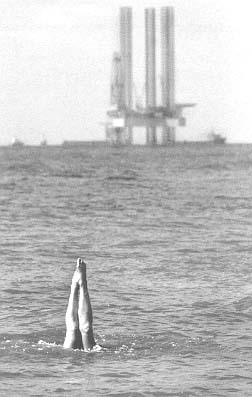
Just Another Day at the Beach? A teenager does a handstand in Alabama waters with an oil rig looming in the distance

Fearing a threat to tourism and the marine ecosystem, members of three state delegations -- California, Florida, and New Jersey -- have introduced or will introduce legislation permanently barring oil and natural-gas production near their shores. They and other cautious lawmakers from coastal states are seeking special protections under any plan to allow additional drilling in U.S. waters. Meanwhile, members from Gulf Coast states, eager for funds to rebuild areas ravaged by Hurricane Katrina, are looking for a guaranteed share of the drilling revenue. Negotiations with all of these coastal-area lawmakers will prove pivotal to proponents of expanded offshore drilling.

Since 1982, Congress has enacted annual moratoriums prohibiting new offshore drilling beyond where it occurs now in limited areas off the coasts of Alaska, California, and four states along the Gulf of Mexico (Alabama, Louisiana, Mississippi, and Texas). Separate presidential bans expire in 2012.

In an effort to avoid a complicated, contentious debate over the federal moratoriums, Senate Energy and Natural Resources Committee Chairman Pete Domenici, R-N.M., and ranking member Jeff Bingaman, D-N.M., crafted legislation requiring the Interior Department to hold an oil and natural-gas lease sale within one year for an area of the eastern Gulf of Mexico, called Lease Sale 181, that is not covered under the bans.

The committee approved the bill by a 16-5 vote on March 8, and Domenici is pushing for a Senate floor debate. Opening Lease Sale 181 to drilling "is so much an American issue right now," he said in an interview. "It stands tall above all these other issues."

The legislation would allow drilling in about 2.7 million acres and could produce as much as 5 trillion cubic feet of natural gas, according to the Interior Department. The department has proposed a five-year leasing plan for 2007-2012 to allow drilling in about 2 million acres of Lease Sale 181, a smaller area than the Domenici-Bingaman bill calls for.

On the floor, the legislation faces a threatened filibuster by Sen. Bill Nelson, D-Fla., who is sponsoring a bill with Sen. Mel Martinez, R-Fla., to put up a nonproduction buffer of up to 260 miles around their state's coastline. The Domenici-Bingaman bill essentially grants Florida a 100-mile buffer.

Other Democrats who champion environmental issues could also try to derail the Domenici-Bingaman bill. During last year's energy debate, Sen. Barbara Boxer, D-Calif., was among those who opposed requiring the Interior Department to inventory oil and natural-gas resources on the Outer Continental Shelf. "The underlying bill could very well lead to more offshore oil drilling, could devastate my state and its way of life," Boxer said at the time. "I do not see how it makes sense to say, on the one hand, we are protecting our beautiful coastline with moratoria and then allow the inventory to go forward…. To me, it is almost a moral issue, that we protect the beauty we have been given, this God-given beauty."

For their part, Gulf Coast lawmakers want a bigger share of the revenue from oil and natural-gas production in federal waters, which currently goes to the U.S. Treasury to be divvied up among all states. "Louisiana's goal, and the Gulf Coast's goal, is to get a fair share of these revenues," Sen. Mary Landrieu, D-La., said in an interview. Budget hawks and Bingaman, however, oppose targeting the revenues in this way.

On March 16, Landrieu supplied the lone Democratic vote that enabled the Senate to approve its nonbinding fiscal 2007 budget resolution, 51-49. Her support came after she worked with Domenici and other Senate GOP leaders to insert a provision calling for a Gulf Coast relief package of as much as $10 billion, to be financed by excess revenue not currently projected from offshore energy production, by proceeds from drilling in Alaska's Arctic National Wildlife Refuge, and by sales of broadcast spectrum.


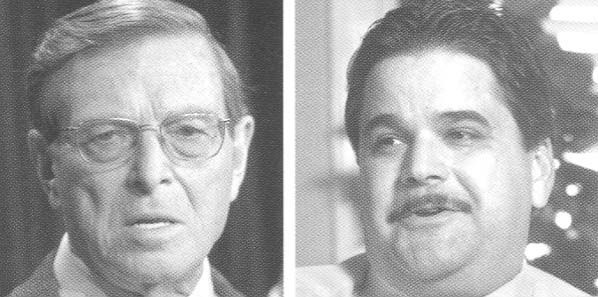
Key Chairmen Pete Domenici's committee has already approved offshore-drilling legislation, and Richard Pombo's panel hopes to do so soon.


Congress would still need to authorize this "reserve fund" for the Gulf Coast. And, of course, GOP efforts to allow ANWR drilling are highly controversial and went down to defeat during last year's budget debate. Nevertheless, Landrieu said that Domenici and Republican leaders have assured her that they will fight to authorize the reserve fund this year; excess digital spectrum sales alone may provide the promised $10 billion.

In the House, Resources Committee Chairman Richard Pombo, R-Calif., plans to schedule a markup within the next month on legislation expanding offshore energy production, but he is still choosing among several competing GOP plans. "I think the way I'd [prefer to] do it is, have one bill be the base bill, and then put it in for amendments and let it work its way out," he said in an interview.

Pombo wants a committee vote soon to boost the chances of getting an offshore-production plan through Congress this year. "I don't know if we can pass it in the House. I don't know if we can conference with the Senate. I don't know if the Senate can pass a conference bill," he said. "We should try. We should try to pass something."

Last year, Pombo introduced legislation allowing states to opt out of the federal oil and natural-gas production bans and providing more revenue to coastal producing states.

Rep. Bobby Jindal, R-La., a Resources Committee member who represents part of the hurricane-damaged New Orleans area, is sponsoring a bill granting states as much as 75 percent of the revenue gained from drilling off their shores. "This year is critical" for the legislation, Jindal said in an interview. "I think every day that you get away from the storms makes it a little bit more difficult."

Jindal predicted that Bush administration officials "very likely" will support giving states a guaranteed share of the revenue for new production that occurs in areas that are not now leased and where revenue is not projected by the Congressional Budget Office. One energy lobbyist suggested that the funding would be couched as "coastal impact assistance," rather than called "revenue sharing," to try to appease budget hawks.

Rep. John Peterson, R-Pa., another Resources Committee member, is sponsoring a bill that lifts the natural-gas production ban entirely. He has been circulating a fact sheet to colleagues warning that the Cuban government is sanctioning offshore oil and natural-gas drilling within 60 miles of Florida's southern coast and may lease drilling as close as 45 miles from the Florida Keys to energy companies in Canada, China, Venezuela, and other countries.

"Why do we deprive the right of Americans to have energy off their coasts when Cuba is doing it?" Peterson said in an interview. "It doesn't make any sense."

By: Goode, Darren, National Journal, 4/1/2006

Monday, March 20, 2006

No escaping politics

In Taiwan these days, with the next presidential election already on the horizon, discussion of economic questions and virtually everything else has become highly politicised. The administration of the president, then Shui-bian, who will be standing for a second term early next year, feels under heavy pressure to boost economic performance and cut unemployment.
But the opposition parties, which still control about half the legislature, are reluctant to see Mr Chen gain credit for any achievements. The resulting stalemate leaves businessmen frustrated. In the meantime the economy continues to plod along at growth of below 4%, sluggish by traditional standards. Progress on financial reform also looks uncertain, despite widespread backing for such measures in principle. But at least relations with mainland China lately have been calm.
For better l China relations. While no major breakthroughs are foreseen in the impasse between Taipei and Beijing, the level of cross-Strait tensions is likely to remain low for at least the coming year. With a new leadership team recently installed in Beijing, the Chinese government is expected to be preoccupied with domestic matters for the near term. In addition, China will undoubtedly wish to await the results of the March 2004 presidential election in Taiwan before taking any new policy initiatives towards the island.
Furthermore, after seeing its attempts to intimidate Taiwan voters backfire in the past two presidential elections, Beijing this time will probably do its best to avoid creating a crisis atmosphere. This shift in diplomatic approach is made more likely by the joint campaign between Lien Chan, head of the Kuomintang (KMT, or Nationalist Party), and James Soong of the People First Party (PFP). Both parties support, with caveats, the principle of eventual reunification with mainland China. Beijing may feel that it can better influence the outcome of the election by offering a friendlier face, in effect promising the benefits of closer cross-Strait co-operation if Mr Lien (the likely joint presidential candidate) is elected.
For his part, Mr Chen will seek to improve his reelection chances by reassuring the electorate about his ability to manage cross-Strait relations skilfully. Progress towards meeting one of the business community's main goals the opening of direct transportation links across the Strait may be slow, but at least fears of conflict between China and Taiwan will not be a major factor in business decision-making.
l IPR protection. After a period of resistance to pressure from other governments (notably the US) and foreign companies for stronger action against intellectual property rights (IPR) violations, the government recently has moved to tighten its laws and enforcement. A new Copyright Law expected to be enacted this session would increase penalties against infringement but most importantly it would make such offences a public crime. In the past, police and prosecutors had to wait for victims to lodge complaints before taking action. The interior ministry has also changed internal police procedures to give officers more incentive to conduct raids. But these steps still leave one nagging problem: the practice of many judges of letting IPR offenders off with lenient sentences.
For worse l Political stalemate. The approach of the presidential election in March 2004 is exacerbating the already acrid atmosphere in the Legislative Yuan (parliament), where the voting strength of the opposition is roughly equal to that of the ruling Democratic Progressive Party (DPP) and its allies.
With the two sides at constant loggerheads, passage of necessary economic legislation is often stymied. Examples of bills that have suffered delays are government proposals for increased public construction projects and job creation, measures that the opposition fears will be used for partisan political purposes. Even within the executive branch, officials are likely to have less time to concentrate on policy as the election nears.
l Financial reform? The government's postponement last autumn of reorganisation of the troubled credit departments of farmers and fishermen's associations has raised concern over the pace of financial- sector reform. Officials express optimism about being able to meet the goals of their 2-5-8 plan: reducing banks NPL ratios to below 5% and increasing their capital-adequacy ratios to above 8% within two years. But achieving those goals will require raising the capitalisation of the Financial Reconstruction Fund from the original NT$140bn (US$4bn) to some NT$900bn and the legislature has not yet acted to approve that change.
l Economic malaise. Although economic growth is projected to reach 3.7% this year slightly better than the 3.5% achieved in 2002 and a huge improvement over the negative 2.2% of 2001 that level of economic activity still strikes most Taiwanese as sluggish. As recently as 2000 the economy grew by 5.9%, a performance that at the time was considered unimpressive.
Unemployment remains at an uncomfortable level of just over 5%, and people's sense of their economic well-being is also affected by the tendency to compare Taiwan's situation unfavourably with that of coastal China. Although the impact of the Severe Acute Respiratory Syndrome (SARS) outbreak has not hit Taiwan as hard as some other countries in the region, it is yet another factor contributing to the still mediocre levels of consumer confidence and anaemic retail sales. l Global weaknesses.
With exports accounting for more than 45% of GDP, Taiwan relies substantially on foreign trade to drive the economy. Currently the global markets for Taiwan's exports are beset with uncertainties. Recovery has stalled in the US, which takes about one-quarter of Taiwan's exports. China and Hong Kong, which together account for roughly another quarter of overall exports, are facing serious new challenges due to the SARS epidemic and its impact on travel. Japan, also a major market, continues in its stagnation. As a consequence, the trade engine that was expected to instil some economic momentum this year has been left to operate on reduced horsepower.

Business Asia April

Greater China

A very bad dose of flu construction or being planned, will help keep people moving as the local population continues to expand. River port facilities tying Hong Kong even more strongly into the Pearl River Delta are also steadily being upgraded, both for passengers and cargo.
Throw in a continued push by Hong Kong.s airport to maintain its status as south China.s air-freight hub, and companies have little to fear about Hong Kong.s transport and other infrastructure being anything but excellent. For worse l Service economy to falter.
Hong Kong's broader economy runs principally on services: tourism accounts for around 10% of GDP (if visitor spending in hotels and restaurants is included), and the wholesale and retail trades for around 4%. Services as a whole account for around 86% of GDP. SARS will hit tourism and retailing badly, regardless of how long the disease poses a health threat. Even after its spread is controlled, travellers are likely to remain extremely wary for several months. Our forecast of 0.3% real GDP growth this year is based on the optimistic assumption that SARS will be contained by the public health authorities in the coming weeks.
If the outbreak drags on for much longer, the impact could be even more severe. Other sectors will also be directly or indirectly affected. The financial, insurance, property and business services industries have taken steps to mitigate the impact of the disease, but many such measures will affect both business and the economy. Bans on staff travel, for example, will reduce future business as well as hitting airlines.
l Continuing weak leadership. The administration of the chief executive, Tung Chee-hwa, shows no sign of being able to establish clear policy initiatives, and continues to cave in to pressures from powerful business lobbies. In the latest example, recommendations that various responsibilities for the regulation of listed companies be removed from the profit-making stock exchange and placed with the market regulator were promptly shelved for further consultation by Mr Tung after an outcry from the stock exchange. The outcome is that general uncertainty over the direction of government, especially in the areas of tax policy, is likely to continue.
l Crisis of confidence. The low popularity of Mr Tung and some of his key officials is becoming a problem. The government is widely seen as out of touch, and the political inexperience of officials is beginning to show (as was the case in the recent Lexus-gate scandal, in which the financial secretary, Antony Leung, failed to reveal that he had bought a new luxury car shortly before introducing a sharp hike in vehicle first-registration taxes in his 2003/04 budget). The new accountability system of appointed officials introduced in 2002 with the aim of bringing greater administrative responsiveness appears to have made senior officials more accountable to no one except Mr Tung. The administration is developing a reputation for stumbling from one crisis to the next.
l Uncertain future role. Hong Kong's lack of confidence in its ability to negotiate the next few years will worsen as a result of SARS, but this merely underlines continuing anxiety over the territory's long-term prospects. This is fuelled in particular by concerns that Hong Kong's status as a logistics and financial services hub for China may be eclipsed.
Since Hong Kong's return to Chinese sovereignty in 1997, it has endured two recessions while China has continued to boom; this had led to growing questions as to where Hong Kong's future lies, especially as improvements in south China's ports and infrastructure threaten the role of its harbour and Shanghai 's financial clout continues to grow. Although such fears are overblown nowhere in China is close to rivalling Hong Kong's international services skills, and Shanghai will not emerge as an international financial rival at least within this decade the pervasiveness of such fears may undermine external confidence in Hong Kong.