Saturday, December 09, 2006

Outbound

Bone weary in the wee hours, rolling west out of Colorado. I make it only as far as Green River before pulling off for a nap at the back of an abandoned gas station, easing past a sad toss of weeds and cracked concrete and rusted barrels. The rest of the night plays out to the whine of big trucks on Interstate 70: some running for Denver, others west to 1-15 and then on to California. Every so often one slows and exits, rumbles past me here on the outskirts — pausing barely long enough for a tank of fuel, maybe a microwaved burn to at the Gas-N-Go on West Main. Nearly everyone, it seems, is just passing through.

Listening to the engines in the darkness, I'm reminded of the story of an anthropologist from Boston sent west to California in the 1920s, assigned the job of chronicling the language of the Pit River Indians, even then on the verge of extinction. At one point the young researcher asks the elders their word for newcomersrecent arrivals, European descendents like himself. The men get nervous, refuse to answer. Finally, after much cajoling, they give in. The word is inalladui, one old man explains. Tramp. We can't understand how your people travel through without ever stopping long enough to learn something of the land; without ever binding a place to your heart. We think a part of you must be dead inside.

I'm up again at dawn, glad to trade the four-lane for Highway 95 — a sweet, lonely path along the San Rafael Swell. Beyond the road, the land is dappled with locoweed and purple vetch, dropseed and cheatgrass and fescue, here and there the occasional huddle of juniper or cottonwood. This was Jane's country. A wind-shorn mix of rock and wind and sky that changed her utterly, turning her at 18 from a Midwest farmer's daughter into an outdoor educator. An Outward Bound instructor. A national park ranger. "You know if something ever happens to me," she said shortly before she died, relighting a conversation we'd had years before, "I want my ashes scattered in my favorite places." Five days later she was gone, lost in a canoeing accident on the Kopka River, in the dark woods of northern Ontario.

And so I travel. Journeying across the West with a small brown pottery jar of her ashes, ultimately bound for six perfect pieces of wilderness: Idaho's Sawtooth Mountains, where 25 years ago I stood beside her in a field of camas lilies, me in my gray suit, she in her wedding dress; a certain little cabin in the pine-covered foothills of Wyoming's Absaroka Range; the heartbreakingly beautiful northern range of Yellowstone, where on

spring days she knelt beside 12-year-old kids, hearing them catch their breath at the sight of wolves; a couple of alpine gardens near home, deep in the Beartooth Mountains of Montana. And today, Capitol Reef National Park, in southern Utah.

These were the essential landscapes of our lives. And though for me right now the joy is nearly gone from them, choked by this jagged pill of grief, Jane's last wish means I cannot stay away. Later in the afternoon on the eastern edge of Capitol Reef, with the sun lighting clusters of rabbitbrush and Apache plume, I grab my pack and walk with tears streaming down my face toward the great maze of the Waterpocket Fold. Barren capes of slick rock. Slot canyons. A lone raven, his voice full of gravel. At one point a slight breeze from the east begins to rise, and that's when I open the lid and release her, watching puffs of ash drift into the upturned fringes of the fold. Even these scant vestiges of her are not long for this world. Soon they'll be disassembled into tiny jots of carbon; those, in turn, feeding the very web of life that so inspired her.

What the Pit River Indians understood that the young anthropologist from Boston likely did not, is that to stop moving, to rest on wild land, is to be nudged toward relationship. Or more specifically, toward an urge to weave the stories of relationship. Awaiting us on unfettered lands are exquisite metaphors — images to feed not so much our quest for meaning, as our hunger for place. Even for me, on this somber afternoon, there are notions of kinship. In the silence. In the faint scent of dust. In a frail and lovely patch of sumac withering in the hot sun, dropping leaves, desperate for rain.

By Gary Ferguson

Wednesday, November 08, 2006

Travel Trick

Renewing your passport is an expensive pain, in part because you have to find a place that can take the very specific type of unflattering photos the U.S. government requires. Now you can make them yourself with epassportphoto.com. Snap a headshot against a white wall with your digital camera, upload the photo, and the site will resize and crop it to passport specifications. Print six photos Oh a 4×6 sheet, or order a set from an online photo service.

Popular Science

Shoot More Ducks

Ten fun tips to improve your waterfowl season

The basics of duck hunting are the same no matter where you are: decoys, calls, shotguns and shells, blinds, bracing weather and, most important, ducks to work. But over the years you come across a few useful tricks. Here are some of mine.

1. THE EASY-MONEY SHOT
When I was a boy my father would take me with him to a railroad Sack that ran alongside a local lake. Ducks would trade back and forth between the lake and another marsh a mile or so away. When the ducks left the lake, they flew over a steep hill and then the railroad bed, which was even higher.

Many of the ducks were well within range when they crossed the railroad track, which made for some excellent pass shooting. I hunted with my first shotgun, a single-shot 16-gauge Winchester Model 37, and my father quickly taught me how to hit the high overhead shot, coming or going. "Start behind the duck and swing through. When the bird is blotted out by your barrel, pull the trigger and keep on swinging," he told me. It was solid advice, and 40-some-odd years later, the high overhead shot is the only one I'd ever bet money on making.

2. AN ICE-FREE HOLE
On late-season hunts it's often necessary to knock a hole in the ice for decoys. Always try to break the ice in large slabs and then slide them under the secure ice on the edges of the hole. If you simply break the ice into small chunks and throw the decoys out into the mix, ducks will be reluctant to decoy. I've found that if I can't break the ice into slabs, I'm better off just setting my decoys on the ice. Like some scotch drinkers, ducks don't like ice cubes.

3. JUST A COUPLE OF BLOBS
Entire books have been written about the subject of how to set out decoys. Most have pretty drawings, too. I've tried some of them and they do work, but none better than my old "twin-blob spread." Just toss a blob of decoys to the left and a blob to the fight, leaving a sweet spot in the middle. Sounds too easy, fight? Well, sometimes the simplest solution is the best one.

4. DUCKS OUT OF RANGE
Many hunters insist upon putting most of their decoys well within range and then putting one or two decoys almost out of range. Such "marker" decoys are intended to serve as a range reference for hunters when ducks come in. What the way-out decoys often do instead is entice ducks to land not only short of the main spread, but short of the markers as well. If you need a range indicator, use a stick or pole stuck in the mud instead of decoys.

5. SWITCH-HITTERS
When my father was in his 40s, he went partially blind in his fight eye and was forced to train himself to shoot lefthanded. Because of that experience, as soon as I became somewhat adept at shooting from my natural side--the fight side--my father insisted that I learn to shoot left-handed as well. At the time I thought it was totally unnecessary, but evening after evening I would stand in the middle of the living room floor, an empty shotgun in my hands, snapping the stock to my left shoulder as Pa tossed my mother's couch pillows across the room. I've got to admit, Pa was fight. Being able to shoot from either side paid off in the duck blind on those hard over-the-right-shoulder screamers that most right-handers, including this one, find nearly impossible. Practicing left-handed won't cost you anything, so give it a try.

6. DON'T OVERCHOKE
I grew up hunting ducks in an era when duck hunters, almost to a man, favored 12-gauge pumps and semi-autos with 30- or 32-inch barrels and full chokes. Many hunters continue to hunt with the same sort of guns today, and in doing so they are unwittingly handicapping themselves. After having tested steel shot from all the major ammunition manufacturers through a variety of guns and chokes, I have never found a fullchoke barrel that did not leave holes in the pattern a teal could fly through. A modified or improved-cylinder choke is best for steel.

If you want to stick with Ol' Betsy, spring for the extra bucks and shoot either Bismuth or Kent TungstenMatrix. These nontoxic loads pattern beautifully through a full choke. Federal's popular Tungsten-Iron loads pattern best from either improved or modified chokes. HEVI-Shot, another nontoxic option, patterns so tightly that unless you're in a situation where long shots are going to be the rule of the day, you're better off with less choke constriction.

7. SEEK THE SHADE
When hunting flooded timber on a sunny day, always lean against the shady side of the tree. Ducks will have a much more difficult time spotting you in the shade than they will if you're standing in bright sun.

8. WEIGHTED BUNDS
The biggest problem with a cloth boat blind is that the cloth can billow and flap unnaturally in a stiff breeze. Ducks often flare from such unnatural movement. My buddy Tommy Akin taught me how to correct the problem. Using short lengths of cord, tie a decoy anchor to the blind every few feet. Adjust the cords so that the anchors hang down a couple of feet into the water but don't touch bottom. You'll have no more duck-spooking flap.

9. PANTYHOSE PROTECTION
Stuffed into a plastic bag in one comer of my shooting box are a couple of pairs of women's pantyhose (save the wisecracks). When I shoot a duck I want to save for mounting, the pantyhose afford the protection needed to ensure that the bird will arrive at the taxidermist's shop in perfect condition, just slip the duck headfirst into one leg of the pantyhose. When you take the duck to the taxidermist, cut the pantyhose below the head and lift the duck out. Don't try to back it out the way it went in or you'll bend and break the feathers.

10. DOUBLES AND TRIPLES
Have you ever noticed that some hunters routinely take a pair or even three ducks out of a decoying flock, while others struggle to scratch down a single bird? Hunters who make a habit of doubling or tripling never, never take the easy bird first when a flock decoys. Conversely, hunters who rarely double always take the "candy" bird first. If you want more doubles and triples, pick a drake towards the middle or back of the flock for your first shot. After that, go to work on the lead birds. Usually the lead birds will be stalled out over the decoys and it will take them a second or two to reverse gears. This makes number two--and sometimes number three--much easier pickings.

GREAT GRILLED DUCK
If you're successful in bringing home a few ducks this season, you might enjoy this simple recipe.

1 Split the ducks in half and marinate them with a couple of quartered onions overnight in your favorite marinade. (Hickory- or mesquite-flavored marinades complement the taste of duck very well.)
2 Place the ducks and onions on a charcoal or gas grill and cook at medium heat for about 10 minutes per side. Do not overcook. Anything past pink is too well-done.
3 Remove the ducks from the grill, slice the onions over the top and dig in.

By Gary Clancy, Outdoor Life, Sep2006

Tuesday, October 24, 2006

Laying Claim to a Little Paradise

David Gilmour made Wakaya a posh resort. Now Fijians want it back.

Foreigners have always found it hard to resist the siren song of the Fijian isles. And the locals have always found it just as tough to repel them. Take the island of Wakaya, a 2,200-acre emerald of lush jungle greens and chalk-white beaches that rises from the Koro Sea's shark-rife waters about an hour's flight from Suva, the Fijian capital. It is today wreathed in those same lagoony hues of aqua and turquoise that Captain Bligh, cut loose from the mutinous Bounty in 1789, skimmed when seeking refuge in Wakaya's bay. For Bligh, it was not to be. When native warriors aimed their canoes at his small open boat, the captain surmised their intentions -- as he later wrote in his diary, "not necessarily of the most friendly variety" -- and retreated. Now, David Gilmour, the Canadian financier who has owned Wakaya since 1972, has his own troubles with locals: a group of Fijians who argue the island was fraudulently sold two centuries ago, and are laying claim to it.

Times have changed since the Fijian islanders ate their interlopers. Rather than warriors, Gilmour, who has converted Wakaya into a luxurious five-star refuge for the extraordinarily rich, may soon be confronted by lawyers. And he is not alone. Mel Gibson recently bought yet another disputed island and is contending with similar claims. But Gilmour is not known to shrink from a fight, especially one with so much at stake.

Now in his mid-70s, Gilmour was the long-time partner of Peter Munk, with whom he founded such ventures as Barrick Gold, the mining powerhouse, and real estate giant TrizecHahn. Still, wealth has not always sheltered foreigners in Fiji. A coup attempt in 2000 spread from Suva into the archipelago's far-flung resorts -- including the seizure by insurgents of Laucala Island, then owned by the family of U.S. publishing magnate Malcolm Forbes. And when another group of insurgents raided Turtle Island, they held its American owner and a number of guests hostage for some two months.

Even so, Fiji has remained a mostly tranquil island paradise since it first began to boom as a tourist destination in the 1960s. And few resorts can rival the Wakaya Club's guest list of starlets and millionaires. It is where Conrad Black and Barbara Amiel honeymooned, and where Keith Richards suffered his concussive fall from a tree last spring. Demi Moore and Ashton Kutcher have holidayed there -- as have Michelle Pfeiffer, Jim Carrey, Céline Dion, Rupert Murdoch and Renée Zellweger. When Nicole Kidman departed Wakaya with old friend Russell Crowe in 2001, she is reported to have just missed her ex-husband, Tom Cruise, who flew in on the island's own private airline just days later.

Indeed, the island, which accepts just 24 guests at a time -- each of whom enjoys a 12-to-one staff-to-guest ratio -- is perhaps the most exclusive holiday destination in the world. As the resort's slogan says, this sprawling, thatch-roofed Xanadu is where "people who have it all go to get away from it all." Eight well-appointed, 1,650-sq.-foot cottages sit against the sea or the island's idyllic gardens, and set guests back up to $7,600 a night. A ninth cottage -- the Governor's Bure -- boasts 2,400 sq. feet and is staffed with butler, laundry service, chef and chauffeur. Alcohol is unlimited. The food is largely Wakaya-grown, cultivated from island corners teeming with wild boars and deer.

For Gilmour, the resort is just one in a string of business successes. He discovered the island in 1971 during a flight over Fiji, and purchased Wakaya the following year for $1 million. By then, he had already confronted both business zeniths and nadirs alongside his one-time University of Toronto chum Munk. Gilmour -- from Winnipeg, the son of a military man and an opera singer -- was something of an outsider on Bay Street. Clairtone, his first venture with Munk, was a hi-fi manufacturer that by the mid-'60s had turned the pair into the wunderkinds of Canadian business. When it went bust in 1971, the two managed to salvage enough money to start Southern Pacific Hotel Corp., snapping up properties around the world.

Gilmour's swashbuckling over the next three decades helped lead to the founding of Barrick Gold, TrizecHahn, and eventually to another Fiji-based triumph. Gilmour was watching Bill and Melinda Gates -- who honeymooned on Wakaya in 1994 -- playing a round on the island's nine-hole golf course, when he noticed them sipping from bottles of French-imported mineral water. Gilmour realized there was likely a purer source nearby. Within days, he'd been alerted to a recently discovered underground reservoir of 450-year-old rainwater on Viti Levu, Fiji's main island. Gilmour arranged to tap the reserve and established Fiji Water, marketing it through word-of-mouth and savvy product placements in U.S. films and television shows. He sold the company in 2004 -- reportedly for about $60 million.

He has also seen tragedy. In 1983, Munk's son Anthony found Gilmour's daughter Erin -- the two wealthy offspring were said to have been dating at the time -- in a pool of blood, the victim of a still-unsolved knife attack.

Through all the highs and lows, Gilmour's heart always rested with the coral-crested island and his boutique resort for the stars. Though he now spends much of his time in Palm Beach, Fla., and is no longer involved in many of his former businesses, Gilmour continues to operate the Wakaya Club.

Now an indigenous group is preparing a case against the Fijian government in hopes of getting the aging tycoon to cough up his paradise (or at least share its wealth). Francis Waqa Sokonibogi, a Fijian activist who is spearheading the legal case, claims the group has documents proving the group's ancestors were duped out of the island, which was sold by a local chieftain in the 1840s for a single shilling. The government of the day, he says, ignored their protesting forefathers. "We are trying to do this to prevent future coups and unrest," says Sokonibogi, who muses that the Wakayans could one day form a partnership with Gilmour. Yet Doug Carlson, the resort's chief executive, holds that at the time of its original sale Wakaya had not been inhabited since Komai-na-Ua, its ruler in the early 19th century, led its people to commit mass suicide by jumping off a 180-m cliff rather than surrender to approaching enemies.

That version of events is in keeping with what is known of Fiji prior to its becoming a British colony in 1874, when chieftains engaged in internecine battles to evict the inhabitants of neighbouring islands before selling their land to foreigners engaged in the lucrative coconut and sandalwood trades. "There's historical instances of islands being sold for a couple of hundred muskets," says Cheyenne Morrison, an Australian private island broker. Mago Island, purchased by Mel Gibson in late 2004 for a reported US$15 million, is said to have been originally sold for 2,000 coconut plants. On Mago, according to locals now raising money for another court case, is a cave filled with the bones of those slaughtered for the island. Other accounts say Mago's inhabitants were evicted at gunpoint.

Whatever their historical basis, such claims are easily exploited by agitators seeking to fan the rancour of Fijians, many of whom live in Third World conditions even as their neighbours dine on venison. One luxury real estate site now lists Fijian private islands ranging from US$1.25 million to US$38 million. "There's of a lot of resentment in Fiji over the fact that the islands and the resorts are changing hands for astronomical amounts of money -- and the Fijians aren't getting any of it," says Morrison. Yet the legal cases being launched against the Fijian government aren't likely to lead to redress -- particularly when the lands in question belong to two wealthy and connected men. "The court case would be incredibly expensive," says Morrison, "and Gibson and Gilmour have huge amounts of money -- they would just throw money at it."

By: Köhler, Nicholas, Maclean's, 10/2/2006

Sunday, October 22, 2006

Lassie, Come To Houston

The pet-friendly city makes it easy for road warriors to take along their pooch

ARE YOU FEELING guilty about leaving Fido or Fluffy at the kennel while you're away on business? If you're headed to Houston, maybe you should take them along. The American Automobile Assn. rates it the most pet-friendly city in America, at least if you go by the number of AAA-approved hotels that accept four-legged guests.

At the 314-room Hotel Derek in the city's tony Galleria area shopping district, dogs and cats get their own beds, water and food bowls, and a gift bag of toys. Pet sitting is available, and room service will deliver cooked-to-order bow-wow and meow chow. "We realize your dog or cat is part of your family," said assistant front office manager George Trevino, who was recently dispatched to get a carpeted kitty condo for Cher's cat, Mr. Big.

The Four Seasons, Westin, and St. Regis hotels confer posh pet privileges in keeping with their nationwide policies. Smaller lodging facilities, such as the 14-room Lovett Inn in the museum district, also allow pets but don't serve them treats on silver platters.

During your free time you can take your buddy for a romp in one of several canine parks, including the 15-acre Millie Bush Bark Park, named for former President George Bush's late spaniel. It has walking trails, swimming ponds, and paw-operated drinking fountains. Hungry? Stop at one of three Barnaby's Cafes, known for their multi-ethnic menu, decadent layer cakes, and dogs lying under patio tables at their owners' feet.

DOGGIE SHOW
YOU CAN'T TAKE a dog to Houston's Museum of Fine Arts, but you can see its new exhibit, Best in Show: The Dog in Art from the Renaissance to Today, which opens Oct. 1 and runs through Jan. 1, 2007 (mfah.org). It features 75 pooch paintings, photographs, and sculptures starting in the 16th century. Among the pieces is Two Dogs in a Landscape by Jacopo Bassano. Cat lovers shouldn't feel left out. The Cat's Meow, a show of 25 feline-related works, is on display until Jan. 21, 2007.

By: Murphy, Kate, Business Week, 10/9/2006

TREASURES OF THE BVI

The British Virgin Islands are the most popular charter destination in the world. Here's why.

LEGEND says there were pirates in these waters of the British Virgin Islands and here was one, just inches away from me. His breath was foul, his hair tangled from wind and salt water, his beard scruffy and his eyes bleary.

"Argggh," he said, staring me in the eyes.

Not frightened, I turned away from the mirror and then promised myself I'd stay away from the cold, rum-drenched Painkiller cocktails of the previous evening.

We had come to the Caribbean not to find pirates, but to find the treasures they had left behind. The British Virgin Islands have become the most popular charter destination in the world, with dozens of charter companies launching thousands of visitors each month onto these aquamarine waters. Surprisingly, many of these boaters have sailed the waters of the BVI time and time again, returning like migrating birds to the warm temperatures and soft trade winds. What is the enduring allure of this cruising paradise? We were here to search for the real treasures of the BVI.

With this mission in mind, we chartered a Lagoon 43 power catamaran from The Catamaran Company, and it served our purposes admirably. It was fast enough to reach each island easily, it had roomy accommodations and, since the weather didn't cooperate all the time, it proved to be seaworthy and comfortable, even for those passengers in our crew with landlubber tummies. (To learn more about this boat, read our test of the Lagoon 44, an updated version of the 43, in the September issue).

Our starting point was The Catamaran Company's headquarters at Nanny Cay on Tortola, where many charter businesses are based. We were delayed the first afternoon waiting for our provisions but, once loaded, Anden zipped easily at 20 knots across to Norman Island, the first stop in our treasure hunt.

Norman is an island with a legend, since it's supposedly the inspiration for Robert Louis Stevenson's "Treasure Island"; with coves named Money Bay and Privateer Bay, that's no surprise. Pirates once anchored in The Bight, a protected cove now popular with boaters. Today, charter crews consume their rum on a faux pirate ship, the William Thornton, a sometimes raucous night spot in The Bight, though there is also partying ashore until the wee hours. The real draw for Norman are the caves of Treasure Point, where you can snorkel deep into a tall cavern.

From Norman, we cruised past Dead Man's Chest, where the dreaded Blackbeard once marooned 15 men. We were headed for another treasure of the BVI: The Baths on Virgin Gorda.

Until you've seen and explored them, The Baths are hard to explain. Boulders are piled haphazardly as if by a giant, and the result is a series of eerie, half-submerged caverns lit by shafts of sunlight. You wade through the warm pools and end up at a pristine beach for snorkeling. A word of warning: Get here early to beat the crowds.

Although there are mooring buoys, The Baths aren't secure for overnighting, so we chose to cruise farther into Gorda Sound and eventually docked the boat at Biras Creek Resort. This luxe property is superb, from the tropical beachfront rooms to the hilltop four-star alfresco restaurant that has views in all directions. When you're ready to spend a night ashore, this is one of the best places to be.

Later in our cruise, we overnighted at the Bitter End Yacht Club, which isn't as much a yacht club as a celebration of everything boating. Guests in the hillside lodgings (and those staying aboard dockside) have access to fleets of small power and sailboats for exploring, a pair of waterfront restaurants give an onboard chef the night off, and a waterfront pub is always filled with boaters from around the world.

Another day, we picked up a mooring at Marina Cay, just across from the anchorage where Black Sam Bellamy based his pirate operation. Bellamy wasn't all bad, since he didn't murder everyone aboard the ships he plundered. In fact, he once returned a ship to its crew when he found it didn't sail up to his expectations. From a hill, Bellamy's lookouts could spot Spanish galleons sailing up Sir Francis Drake Channel, laden with gold and jewels for the royalty of Spain. We, however, chose to pillage the Pusser's Rum store on Marina Cay. The anchorage is pleasant and a good place to get an early start for exploring The Baths.

Next on our list was an entire island named for a pirate, Jost Van Dyke. En route, we were waylaid by tiny Sandy Cay. Picture in your mind the perfect tropical island: ringed with white sand; picturesque palm trees swaying; gin-clear water lapping at the edges. You've just seen Sandy Cay. Laurance Rockefeller donated the island to the British government as a national park, with the proviso that it stay in its native state.

Anchoring off Sandy Cay is easy. Once off the boat, take the winding nature trails where you might see a coconut crab, a strange creature with huge claws capable of cracking open a coconut.

We didn't linger at Sandy Cay, however, because we wanted to settle in at Great Harbour to meet Philicianno Callwood at Jost Van Dyke. He's known worldwide as Foxy, the owner and entertainer of the Tamarind Restaurant and Bar, one of the most famous watering holes in the Caribbean. The dock in front of this open-air beach bar is always jammed with tenders from the charter fleet, as visitors swill rum while listening to Foxy make up Calypso songs about their home cities far away. Foxy brews his own rum (try the Sly Fox) as well as beer, but it's the convivial atmosphere that draws the crowds every night.

By this point in our cruise, it was apparent that there were several reasons (besides the treasures we'd found) why boaters come back to the BVI. For one thing, the weather is not just pleasantly mild, it's predictable. We hit a front coming through so we had more wind than usual, but we adjusted our routes to fit and pressed on. Sunny skies and mild trade winds are the norm. Easy navigation is another plus in the BVI, with good charts, detailed guidebooks and islands that are within view of each other. Underwater dangers are clearly marked and the buoyage system is good, plus fog is an unknown here.

There aren't many marinas, but there's a system of reasonably priced mooring buoys ($25 a night) at popular destinations, so you don't have to anchor out every night. And, with more than 60 islands and cays in an area roughly 32 miles by 15 miles, there's good reason to come back time after time. You can't possibly see it all in one charter.

From Jost Van Dyke, it's a short hop across to Soper's Hole, a natural harbor at the west end of Tortola that might have been designed by Walt Disney if he weren't busy creating "Pirates of the Caribbean." Lining the full-service marina are brightly colored shops and buildings that are almost a caricature of island style, but fun nevertheless. Soper's is a good first stop for charterers arriving from the U.S. Virgin Islands since Customs and Immigration can clear you into the BVI. Soper's Hole is well-protected in almost any conditions.

Returning our Lagoon power catamaran to Nanny Cay was difficult, but we had proven that the real treasures of the British Virgin Islands aren't gold doubloons or buried jewels, but the sights and delights that draw charterers back year after year.

The Ultimate Sea Trial
By chartering, you can closely evaluate the boat you want to buy.

CHARTERING HAS A LOT OF BENEFITS, including one for those who are thinking about buying a new boat for use in their home waters. Charter operations in the U.S., Bahamas and Caribbean have popular production boat models in their fleet. If you charter one, you'll have the opportunity to really evaluate that model.

Had we not chartered the Lagoon 43 (above) in the BVI, we wouldn't have realized the value of the lounge on the bow; it was the most comfortable seat on the boat, especially in the evening at anchor. It also might not have been apparent in a short sea trial without guests present that more seating area on the bridge would be desirable (new Lagoons have an enlarged flybridge for just this reason). We a so found that the cockpit icemaker was a lot less useful than a cockpit fridge, which wouldn't be obvious on a day outing.

Since they've been in production for so many years, Grand Banks are probably the most popular boats in charter fleets. Grand Banks Yachts has a list of companies that charter its boats on its, but the largest fleet is in the British Virgins at Trawlers in Paradise, which also has Nordic Tugs and Lagoon powercats.

Mainship also has a Web site listing of charter companies.

Blue Pacific Yacht Charters in the Pacific Northwest has a mixed fleet of models from builders like Grand Banks, Bayliner, Meridian, Chris-Craft, Maxum, Silverton, Nordhavn and Carver. Other Northwest charter companies include Island Cruising, with Carver and Meridian, and Cooper Boating, with Meridian, Bayliner, Grand Banks and Ocean Alexander.

In warmer climates, Southwest Florida Yachts has Grand Banks, Mainship and Jefferson, while VIP Yacht Charters in the Virgin Islands has a fleet filled with Jefferson and Tarquin models.

This is just the tip of the iceberg; many other charter companies have production powerboats in their fleets. With a little Internet surfing you could find just the boat you want to try out.

By: Caswell, Chris, MotorBoating, Oct2006

The Geographical Good Guide Guide

Helping you choose that vitally important, but often rather confusing, item of kit: the guidebook Berlitz Hide This… Phrase Book

What are they like?

These concise, pocket-sized phrase books offer less formal terms and phrases for a range of typical circumstances that younger travellers might encounter on holiday. They are currently available for French, Italian and Spanish.

Who are they for?

Judging from the design, the use of 'modernised' English ("Wanna speak some Spanish?" and "Partyin' with the locals") and sections that cover extreme sports, hangover cures, breaking up after a holiday fling and the best tobacco, these "ultra-hip illustrated phrase books" are definitely aimed at younger travellers.

Strong points

They're small, cheap (£4.99) and contain a variety of useful phrases.

Not so strong points

The informal, modernised English can get pretty irritating, as can the book's general tone. And if you're at all curious about a language's basic grammar and structure, you'll have to look elsewhere.

www.berlitzpublishing.com

Tuesday, October 10, 2006

The Ghosts of Calcutta

Hugh Purcell finds stirring memories of the British Rig in this thriving city, a far cry from its dreadful reputation of a generation ago

IT HAS BEEN SAID THAT CALCUTTA ATTRACTS two kinds of visitors, those seeking sainthood by extreme acts of philanthropy and those seeking their past. I belong to the second category. The first time I visited India I felt I had been there before and nowhere do the ghosts of our collective past return more evocatively than in the first capital of the British Raj.

Today Kolkata, as it is now renamed, does not deserve its bad reputation. Kipling called it the 'city of dreadful night' and at times in its history it has indeed seemed that 'above the packed and pestilential town, Death looked down'. In the early 1970s for instance, when it was inundated with refugees from East Pakistan, the travel writer Simon Winchester wrote of 'the hot stench of the slow-decaying poor, the mobs flowing ceaselessly over the Howrah bridge, the treacle of the Hooghly swamps below, the bent and broken limbs and the rotting rubbish piles and the screeching horns and the rickshaw bells and the infuriating calm of the cud-chewing cows.' I remember it too from the Louis Malle documentary film Calrutta (1970), which the Indian Government objected to because its reality denigrated the country. Today's Bengalis do not like the legacy of Mother Theresa either. Whatever you think about her extreme philanthropy, it has been estimated that she cost the city over four billion dollars in lost revenue. Tourists are still frightened off by the images propagated by the Missionaries of Charity, images of begging bowls, of flies on a dying face. Please do not be pui off. In my last two visits to Calcutta I have not encountered this public nightmare and, even if it exists, follow the Paul Scott advice on India and 'seek the scent behind the smell'.

The most evocative view of Calcutta is from the Hooghly river. Take a boat from Fairlie ghat near BBD Bagh, formerly Dalhousie Square where the British built their first fort in 1696. Chug under the Howrah bridge, that singlespan, grey steel lattice edifice that expands four feet in hot weather and carries a million people daily between Howrah on the west bank and Calcutta proper on the east (for India, add a nought to all statistics). On both sides you pass semi-ruins of the old 'go-downs' (an Anglo-Indian word for warehouse where the goods were 'laid down*) factories and counting houses. Then from Garden Reach to Howrah are the long lines of wharves where once the massed masts and then funnels of Victorian merchant steamers crowded the view. For the groundwork of the old imperial impetus is still there, crumbling but visible. Walk along Strand Road South and search on the walls for the faded announcements of trade — First Class Tailors, Hamilton the Jewellers, Spences Hotel.

Calcutta was built by British merchants, by the Mr Five-percents. The first of these was the East India Company's agent Job Charnock who settled on the Hooghly in 1690, little more than 800 years ago. Calcutta is a young city, nearly a century junior to New York, but it grew with a restless energy, some would say with greed. Very soon it became a gigantic emporium. Jute, tea, rice and cotton were transported from all points east and stored along the Hooghly before being shipped on to Europe. And it was the boxwallahs of empire who were the last to leave. It was not the dissolution of the Raj in 1947 but India's economic policy in the 1960s that slowly forced the British out.

Their departure is chronicled on the honours boards of the Tollygungc Club where the Caruthers CBE become Bannerjees between 1955-65. The Tolly' is indeed an 'island of imperial memories' (in the words of Winchester) though the neighbouring 'neat and self-satisfied Calcutta suburbs that John Betjeman might easily recognise' have gone, as have the Joan Hunter-Dunns from the Club tennis courts. Now the members are the new nabobs of Calcutta, Marwari and Bengali businessmen with their families. The last British to leave were Bob and Anne Wright, who ran the Club into the 1990s and considered it their dvity to preserve the relics of empire including the dying and the dead. They even found an undertaker who could preserve in the hot season — heat described by Mark Twain as 'enough to make a brass doorknob mushy' — the bodies of deceasetl Britons long enough for their families to fly out for the funeral. Their most conspicuous achievement, as members of BACSA (British Association of Cemeteries in South Asia), is the restoration of South Park Cemetery. Here the British ghosts live in a city of the dead that was founded in 'the golden age' of Calcutta 200 years ago.

The ostentatious tombs of Georgian classical design are a monument to the richest, most elegant colonial city of all, to the City of Palaces or the St Petersburg of the East as it was called. According to the famous diarist William Hickey, who worked at this time as an attorney, it was also inward looking and self-regarding, greedy and sinful. Poor Rose Aylmer whose tomb in South Park relates that death was caused 'by an addiction to pineapples' must be absolved. The poet Walter Savage Landor certainly thought so: 'Ah, what avails the sceptered race!/Ah, what the form divine!/What every virtue, every grace!/Rose Aylmer, all were thine'. Beyond redemption were the many Writers, as the clerks were called, who died of venereal diseases caught in the brothels that lined the back streets, a result of the scarcity of Rose Aylmers, for in 1800 there were only 250 young British women in a town of 4,000 young men.

India has hundreds of British cemeteries wherein He buried up to two million fatalities of the Raj. Identified by their Victorian Gothic porches they are mostly melancholy places that tell of premature and forlorn death: 'Her only fault was that she left me'. The polished brass plaques in the metropolitan cathedral of St Paul's, Calcutta, tell altogether different stories: of the grandiosity of empire, of the superiority of 'the Heaven born', as the Indian Civil Service was called. Here is a monument to a judge who was also a champion pigsticker, with the smug encomium 'Well done, thy good and faithful servant'. It is tempting to imagine the congregation of sixty years ago, surrounded by marble statuary and cooled by ranks of electric fans, singing the hymn of imperial retreat: 'So be it Lord, thy throne shall never like earth's proud empires pass away'.

Separated on the south side of the Maidan (literally 'great park') by Cathedral Road is the vast Victoria Memorial. The visitor approaches through high ornamental gates bearing the royal coat of arms and is greeted by a statue of the Queen Empress herself, seated on a throne supported by Art, Literature, Justice and St George. Lord Curzon proposed the building as 'a great imperial duty' to commemorate his beloved queen who had just died. Little did he know that it would also become a memorial to imperial Calcutta for the capital of the Raj passed to Delhi in 1911 while it was being built. Cur/on saw it as his Taj Mahal, though built in the Italian Renaissance style, and like its prototype it is made of dazzling Rajasthan marble that is reflected in ornamental pools. Whether he succeeded is a matter of opinion. Some see a civic pile, an oversized town hall under a marble dome, a 'confection of white marble and hubris' (Winchester). Curzon wanted 'a monumental and grand building where all classes will learn the lessons of history and see revived before their eyes the marvels of the past'. So the inside is stuffed with imperial trophies from a lock of Lady Canning's hair to the swords of defeated princes. What can today's Indian schoolchildren think as they wander open-mouthed through the Durbar Room to Queen Mary's Room and across to the Royal Gallery? Whose Raj is it commemorating? (The word raj simply means 'sovereignty'). The truth is that modern Calcutta admires the Victoria Memorial. The Marxist local government that delights in shocking the West — Harrington Street where the US Embassy used to be is now Ho Chi Minh Sarani — have not renamed it, nor has it ever been a focus for rioters.

Visit the Victoria Memorial early in the morning and then sit on the grass of the Maidan, looking north. Let the heat haze mask over the modern city and your imagination replace it with the paintings of the City of Palaces by Thomas and William Daniell that you have just seen. There, shimmering under the blue sky are stately rows of white plastered, neo-classical buildings in the Grecian style; elegant vistas of terraces as Nash might have built them, arched gateways through which further colonnaded palaces appear. Behind are the spires of St Andrew's and St John's. Only the storks perched on ornamental urns or imperial lions give any hint that this is a world away from London or St Petersburg in 1800. Edmund Lear called it 'a humbug of palaces'. Insulated from reality it was, spectacularly. Yet the miracle of Calcutta is that although the past is another country the descendent of the Raj may still visit it today, before retreating to the Tolly' for a gin and tonic.

Hugh Purcell journeys to the St Petersburg of the East, and considers it a good place to witness the remnants of the British Raj, now absorbed in this dynamic city.

USEFUL TO KNOW
Kolkata (Calcutta) in the state of West Bengal has a population of around 15 million.

In September 2007 Hugh Purcell is leading a tour, which ends in Kolkata. to mark the 150th anniversary of the Indian Mutiny. See www.palanquin.co.uk

See www.calcuttaweb.com

By: Purcell, Hugh, History Today, Oct2006

Monday, September 25, 2006

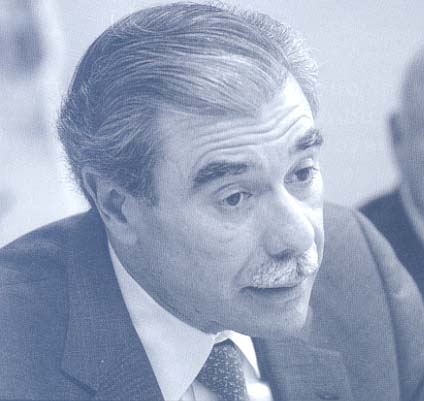
The Nation's No. 1 Travel Agent

By: Singer, Paul, National Journal, 9/23/2006

* Commerce Secretary Carlos Gutierrez is working with the travel industry to boost tourism to the United State and to plead the industry's case to other federal agencies.

As the federal government moves to secure American borders, the U.S. travel industry has enlisted an influential new lobbyist to press its case for protecting the lucrative international tourism market: Commerce Secretary Carlos Gutierrez.

In an odd alignment of government and industry interests, Gutierrez essentially asked travel and tourism officials to help him develop an agenda for boosting their business and to provide him with talking points for pleading their case with other federal agencies that control the borders.

The secretary's focus on travel issues is so intense that Al Frink, the Commerce Department's "manufacturing czar," told an industry gathering in July, "I think that the secretary is impassioned, he's committed. He's even at the point where [in the department's senior offices] it's often said, 'Is there another subject that we have on the table right now besides tourism?' And, actually, I would say the answer is no."

According to Commerce Department statistics, international travel to the United States fell after the terrorist attacks of September 11, 2001, dropping from $103 billion in 2000 to $80 billion in 2003. It returned to the $103 billion level only last year. Tourism is an important component of the U.S. balance of trade, making up about 27 percent of the nation's total service exports.

Since 1995, the U.S. has dropped from second place behind France as the most popular tourist destination to third place behind Spain, and China's booming tourism industry threatens to push the U.S. into fourth. Travel executives argue that the U.S. share of the market is shrinking not only because other countries are trying harder but also because U.S. security concerns are making it tougher for foreigners to get visas. The State Department issued 7.6 million nonimmigrant visas in 2001, but only 4.9 million in 2003 and 5.4 million in 2005.

The industry's most immediate concern is the government's Western Hemisphere Travel Initiative, which establishes new travel document requirements for visitors crossing the Canadian or Mexican border. Industry executives fear that it could eliminate a significant portion of the 15 million trips that Canadians made to the U.S. in 2005.

For more than a decade, the U.S. hospitality industry has been trying (with limited success) to make the case for greater government attention to travel as an economic engine. In 2003, at the nadir of international arrivals, Congress approved $50 million for the Commerce Department to create an international advertising and promotional campaign to encourage individuals to travel to the United States. The provision, tucked into an omnibus appropriations bill, also called for the creation of an industry advisory board to help Commerce figure out how to spend the money.

But most of the $50 million was never spent. The advisory board-officially the Travel and Tourism Promotion Advisory Board-spent about $6 million for a marketing campaign in Great Britain and has $4 million earmarked for a campaign in Japan, but Congress rescinded the rest. By the time the advisory board's charter was to expire in the summer of 2005, "there was a lot of frustration," one industry source said, "and people were wondering whether it was worth renewing the charter."

Carlos Gutierrez: The U.S. government's challenge is to "allow people in who want to travel or to do business, and to keep out people who want to do us harm."

As the advisory board was winding down, the industry decided to overhaul its Washington representation. In June 2005, the Travel Industry Association of America, a sprawling collection of hospitality-related businesses that had struggled to create a unified identity, shut down its small government-affairs operation and handed the industry's lobbying efforts to the Travel Business Roundtable, an association headed by Loews Hotels Chairman Jon Tisch. Promising a "one industry, one voice" approach, TIA's new CEO-former Marriott executive Roger Dow-joined Tisch and advisory board Chairman James Rasulo, president of Walt Disney Parks and Resorts, and several other top travel and tourism officials for a series of meetings in Washington. In the first week of July, the group met with a handful of State Department, Homeland Security, and White House officials to emphasize the importance of international tourism to the U.S. economy and to warn that new border-security initiatives could have a disastrous effect on travel and tourism by making it almost impossible for Canadian and Mexican visitors to make spontaneous trips to the U.S.

The group apparently found a sympathetic ear in Gutierrez, a former CEO of Kellogg.

The day after the travel group announced its "productive high-level Washington meetings" in a press release, a notice in the Federal Register said that the Commerce Department was seeking nominees for a reconstituted advisory board, although it was nearly a month before the department announced its plans for the board. By August, the board's name had been shortened by dropping the word "Promotion," and its mandate had been expanded dramatically. In addition to working on a marketing campaign, the group would advise Gutierrez on "the development, creation, and implementation of a national tourism strategy." Of the 14 industry executives who make up the new board, 10-including its chairman, Rasulo-were members of the old board.

At the advisory board's first meeting in January, Gutierrez said he wanted a tourism strategy in hand in six months. "It may not be as perfectly designed as it would have been if we waited a year, but I would just ask you to think about what we're going to lose by waiting another six months," the secretary said.

In April and again in July, he returned to help shape the final recommendations that the advisory board would make to him. "If we could do one single thing for your industry and we could somehow find ways to improve the flow of visas in a way that maintains all of our national security objectives, I think that would be the single biggest thing we could do for you," Gutierrez said.

The final report, which the board presented to Gutierrez earlier this month, focused primarily on the secretary's recommended issues of improving the process for legitimate visitors to get entry visas to the U.S. while maintaining strong security protections. It also returned to the industry's initial themes-creating a national marketing campaign to sell the U.S. as a destination abroad, and revising the border transit requirements to maintain the ease of travel across the Canadian and Mexican borders.

A week later, the industry executives on the advisory board announced their "Discover America Campaign," a national marketing strategy to attract 10 million more international travelers to the U.S. each year. In public appearances, Gutierrez applauded the announcement.

While Washington bookshelves groan under the weight of advisory committee reports that have never been implemented, perhaps few have come with this kind of personal commitment from a Cabinet secretary. Beyond driving the drafting of the strategy, Gutierrez has already promised to help the industry plead its case before other agencies.

"This is not going to be resolved because we talk about it," Gutierrez told the board in July. "It's going to require a lot of follow-up, it's going to require a lot of pushing with our partners at Homeland Security, with the State Department, because we're dealing with a lot of people, we're dealing with a lot of conflicting priorities.…We at the Commerce Department may not have all the strings, we may not have all the departments reporting in to us, but we can give you access to people who make decisions, who can hear your concerns, who have the ability to address some of your concerns."

In an interview, Gutierrez said his work with travel and tourism is no different from his role with other domestic industries. "We're not in the business of business in Washington," Gutierrez told National Journal. "We don't invest money, we don't create jobs, we don't create wealth. We create an environment so that entrepreneurs and business people can do that. In the case of tourism, that's what we do: We listen to them, and then we see where government policy can help. We do that with other industries as well."

Gutierrez said the travel industry is of growing importance to the nation's economy, and a smoothly functioning visa process is critical to that growth. "There is no question that for us, national security is No. 1," he said. "Anything we do cannot compromise national security. But we believe that in that area of visas and tourists and travelers, we can be of help." The challenge for government, he said, is to "allow people in who want to travel or to do business, and to keep out people who want to do us harm."

DHS and State are moving to address some of the industry's concerns, although industry officials express frustration with the slow pace of change. In January, the departments announced an initiative for "secure borders and open doors," emphasizing the use of new technologies to improve the experience for visa applicants and visitors arriving at U.S. airports. Most of the initiative's projects are under development or in test phases, a State Department spokeswoman said, and one key piece should be rolled out any day now-yet another tourism industry advisory board.

Bound for the U.S.A.
U.S. tourism has recovered to pre-9/11 levels …

… and the U.S. ranks among top destinations …

… but growth is not as rapid as it is in other areas …

International arrivals to U.S. (by year)

Top would destinations in 2005 (in millions of international tourist arrivals)
France 76.0
Spain 55.6
U.S. 49.4
China 46.8
Italy 36.5
U.K. 30.0

First-quarter growth for 2006 (by region)
Africa 11.3%
Middle East 10.8
Asia/Pacific 7.5
Americas 2.7
U.S. 0.5
Europe 2.5

SOURCES: U.S. Commerce Department; International Trade Association, Office of Travel and Tourism Industries; World Tourism Organization

Tuners try to save sizzle

Stunt casting, Web sales and marketing gambits help stretch shows' legs

When a show opens to rave reviews and boffo B.O., producers nowadays can't just sit back and rake in the dough.

They have to prep, both from a business angle and from an artistic perspective, for the possibility of a very, very long life.

Just ask the granddaddy of Broadway tuners, "The Phantom of the Opera," still filling more than two-thirds of the house 18 years after its opening. "It takes a long-term maintenance plan to keep a show sparkly," says "Phantom" general manager Alan Wasser.

Back in the golden age, Broadway shows came and went, and even the hits turned over with some regularity: "Oklahoma!" ran five years (1943-48); "My Fair Lady" lasted 6 1/2 (1956-62).

But beginning in the 1970s, it became more and more common for popular productions to run longer and longer -- "Grease" ran eight years (1972-80), "A Chorus Line" kept kicking for 15 (1975-90) and "Cats" howled for just under 18 (1982-2000).

A handful of economic shifts on the Rialto have allowed shows to run longer. Strong tourism biz can boost a tuner's longevity; ticket buying has been simplified in the Internet age; and the global profile of Broadway fare has risen (think "The Lion King" in Shanghai).

For long-runners, the highest-profile strategy for boosting biz and buzz is, of course, the casting of a celeb or two. Producers Barry and Fran Weissler are the acknowledged masters: Their 10-year-old revival of "Chicago" has gone through a slew of stars and semi-stars, from Melanie Griffith to Huey Lewis to Brooke Shields. Usher is now appearing as smooth lawyer Billy Flynn.

Purists may grumble about possibly inappropriate casting sacrificing art for mercenary rewards, but there's no doubt the gambit can work -- not only at the box office, but sometimes even with critics.

The gross for "Chicago," for instance, skyrocketed by $250,000 -- nearly 50% -- for the first week Usher stepped into the show (he recently extended through Oct. 14). And when the Weisslers cast Reba McEntire in their revival of "Annie Get Your Gun" in 2000, the country singer thesp earned genuinely rapturous reviews that helped the struggling production -- which ran about 2 1/2 years -- eke out a little more life.

"We make lists," says Barry Weissler. "We sit down and think of interesting casting ideas." He says he keeps an eye out not only for the ability of a star to sing and dance, but also for the right texture and quality to fit a specific role.

"If they don't have the acting chops, then they have to have the charisma, the personality to hold the stage," he says. "Often we get both."

But it's not just stars who keep a show going.

As a tuner gets older, useful information about its comparative health emerges from looking back at its performance in the past. "With the amount of data we have, we're trending, we're anticipating," says Thomas Schumacher, producer of Disney Theatrical Prods., the org behind Broadway stalwarts "Beauty and the Beast" (12 years) and "Lion King" (nine years).

"We've been able to identify what the seasonal peaks and troughs are, and can prepare for them," Wasser says of "Phantom."

"Phantom" has varied its pricing by season, often following the lead of "Les Miserables," which discounted tickets during winter slowdowns as part of a strategy that helped it endure on Broadway for 16 years.

Marketing also can change according to the time of year. "During summer, you'll see us advertise all our shows together," says David Schrader, managing director and chief financial officer of Disney Theatrical. "As you get into fall, which is less about tourists, we have to sell each show individually."

Advertising becomes increasingly focused as a run goes on. Many long-runners spend a good chunk of their ad budgets in tourist publications. "Rent" (10 years) aims to reach its young-skewing target demo via a promotional partnership with Gotham pop radio station Z100.

Keeping a show's advertising campaign fluid enough to change and target different demos over time also can help create fresh interest, In 2004, "Phantom" encouraged ands to revisit with the slogan, "Remember your first time."

Movie adaptations have helped extend brands. "Chicago" brought in crowds impressed by the 2002 Oscar winner; "Phantom" piggybacked on the marketing of the 2004 pic to raise sales; and even the poorly received "Rent" movie, released in late 2005, may have contributed to the 27% boost in sales for the Broadway tuner this year, to approximately $20 million for the year to date.

Swapping out a larger theater for a smaller one also can keep a show going as fervor for tickets subsides. Currently at the Ambassador, "Chicago" has moved three times in the decade since the revival opened. "Beauty and the Beast" helped maintain supply-demand equilibrium with a move from the Palace to the smaller Lunt-Fontanne, and "The Lion King" recently shifted to the Minskoff from the New Amsterdam, a theater whose seating and pricing arrangement allowed for no discernible decrease in grosses.

The tradition of downsizing shows to keep a long run financially viable was a constant through the 1940s, '50s and '60s. At that time, producers regularly hired more than the union minimum of orchestra members to keep composers happy. The extra hands, however, were part of a "cuts list" often let go anywhere from the third week to the third year, depending on business. This approach meant shows often had a richer, more robust sound in their first six months than later.

That practice now is more infrequent, largely because no producer is willing to exceed the minimum to begin with. Cuts usually happen in areas other than the orchestra, such as sets and ensemble. The scaling back of "Beauty and the Beast" was even lampooned in a "Forbidden Broadway" number called "Beauty's Been Decreased."

Another trick is managing the money a hit show is making.

"How we handle our dollars is just as important as how we market our show," says Jeffrey Seller, one of the producers behind "Rent." "That is, we try not to overspend on it, and keep our nut low."

But the need to keep costs down must be balanced with the understanding that a show has to look spiffy. Replacing lighting equipment whose color has faded, repainting banged-up set pieces and creating costumes for new cast members all require regular spending.

When a new thesp takes over as resident "Phantom" diva Carlotta, the creation of her custom-fit wardrobe costs more than $100,000. "We put away an amount each week to put toward the cost of maintaining a production," Wasser says.

Constant creative supervision is also key. The original helmers of most long-runners -- as well as a corps of designers, choreographers and other staff -- check in regularly with productions: Michael Greif tends to select the principals for "Rent," and Harold Prince usually approves actors who go into major roles in "Phantom."

To maintain a standard of performance, supervisors monitor productions both on Broadway and on the road. "I give notes," says Peter yon Mayrhauser, production supervisor of "Phantom." "It's very good for the actors. Our biggest enemy is getting complacent."

By: Suskin, Steven, Cox, Gordon, Variety, 9/25/2006

Tuesday, September 05, 2006

Lateral thinking needed to unite Caribbean and Diaspora

Uniting the Caribbean Diaspora is back on the agenda, following news that the Caribbean Tourism Organisation (CTO), under the leadership of Bahamian Secretary-General Vincent Vanderpool-Wallace, is seriously trying to integrate the Diaspora in its plans, the fruit of which will be the greater contribution of our gifts, talents and abilities to our own development in the marketplace and in the Caribbean region.

Community leaders at home and overseas have lone explored this topic, but it has not gained much momentum primarily because selfish ambitions, egocentered motives, and that insular mentality that we so love to perpetuate have thwarted it. Last week, I mentioned that people of Caribbean descent do have a substantial role to play in Caribbean integration, even while they live outside the Caribbean, and the CTO'a vision and plans may just be the prescription needed at this juncture of our history. Once successfully implemented in the marketplace, perhaps our leaders will be sufficiently motivated to renew their minds, unite their efforts, and transform our region.

The willingness of the region's top tourism body to play a major role in this effort is important, given CTO's influence with its 32 government members and a slew of private-sector entities that can help provide the structure, framework, funding and political will for such an initiative. Furthermore, while CTO's mission is to provide to and through its members, the services and information needed for the development of sustainable tourism for the economic and social benefit of the Caribbean people, the fruit of the Diaspora project transcends tourism and focuses on transferring talents to help raise the bar of excellence across the region.

Already, members of the Caribbean Diaspora and Caribbean region are getting excited. In Brooklyn, a member of the Caribbean-American media commented, "Perhaps Mr. Vanderpool Wallace could appoint a CTO advisory board immediately and set up a Diaspora consortium to handle part of the PR and advertising to show his good faith," no doubt referring to the inverted prejudice that has prevailed in tourism organizations where advertising and public relations resources by-pass consultants and firms from the Caribbean and African Diaspora.

"He can lead by example," the writer continued on a list-serve that targets Caribbean writers interested in sustainable development. Then maybe the various boards of tourism would be forced to reflect on his leadership (and) example…I have engaged enough ministers of tourism of the region who have a mindset that excludes the Diaspora from meaningful participation…as we say in the Caribbean, they love to 'old talk.'"

Dr. Basil Springer, a weekly columnist for the Barbados Advocate, who in the interest of transparency is my "old man" (but always has new ideas), said: "We do have 'bridges' and tunnels' that link the countries in the Caribbean, but the toll is too expensive. What is the average load factor by origin and destination within the Caribbean on LIAT, Caribbean Star, BWIA and Air Jamaica? If we could devise a yield management system to fill those empty seats to the mutual benefit of the traveling publics and the airlines at a much cheaper toll, this may go some way to increasing the people integration in the Caribbean. Accommodation may be solved by barter arrangements with family and friends and by using the empty room nights in hotels and guest houses in some creative manner. Lateral thinking such as this is needed to solve the problem."

He also opined that telecommunications companies, too, can be asked to join the fray by reducing the cost of telephone calls to Caribbean call-in programs to specific telephone numbers over the period of the call-in program. "Look at what (Alien) Stanford has done with 19 countries in the 20/20 tournament. Caribbean Star's income during July 2006 must have improved significantly moving all those teams to Antigua, in many cases along with their supporters. His apparent generosity is partly building his airline, and I would not be surprised if this generosity gives a large return on investment as he markets the new form of the game in the U.S."

The lateral thinking has begun, and hopefully before long, CTO's efforts will translate into a lot of lateral action to bring and people closer together.

By: Springer, Bevan, New York Amsterdam News

Friday, September 01, 2006

Expanding Boundaries for Family Getaways

Family travel is on the rise this summer, according to an American Express travel agent poll, as vacations are expanding beyond the traditional getaways to include newer, broader, and more active and meaningful travel plans. Agents point out that top motivators for family travel include the desire to introduce children to different cultures, customs, and lifestyles, as well as to experience new things together and create lasting memories.

Respondents maintain that families increasingly are drawn to active and experience-driven travel plans. Poll results show that agents are booking more out door, adventure family vacations (62%) and international trips (57%). Some 49% of travel agents polled say cruising is a growing trend in family travel as well. Moreover, family reunions are on the rise, declare 41% of agents. Indeed, family members are pairing up to travel: 64% of agents are seeing more mother-daughter getaways, while 36% note an in crease in father-son tandems. Almost two-thirds of agents indicate that spa getaways make up most mother-daughter vacations; fathers and sons usually choose active vacations, such as hunting, biking, hiking, or fishing.

Within the U.S., Orlando ranks as the top destination. New York and Miami are second and third, respectively. Las Vegas and Hawaii round out the top five.

When agents were asked to name the most popular international destinations for families, London, Rome, and Paris took the top three spots. Other popular international destinations include Cancun, Mexico; Nassau in the Bahamas; and San Jose, Costa Rica.

Source: USA Today Magazine, Aug2006